
Reviewed · TOURS
7 Day Tour through Armenia
Armenia packs a surprising amount into a small country, and this seven-day tour gives you a broad sweep of it. You move from Yerevan’s cafes, museums, and Soviet-era avenues to lonely monasteries, mountain roads, medieval fortresses, and the blue waters of Lake Sevan. The real attraction is the contrast: one day you are tasting Armenian brandy, and the next you are standing among stone churches high above a gorge.
I like the wide geographic range and the way the tour mixes major sights with smaller churches that many first-time visitors would miss. I also like that admission tickets are included at most stops, so you are not constantly reaching for your wallet.
The main drawback is the pace. Days six is especially packed, with eight listed stops, and the standard one-hour allocation at each place leaves little room for long walks, quiet reflection, or an unplanned meal. This is a sightseeing sweep rather than a slow cultural stay.
Key points to know before booking
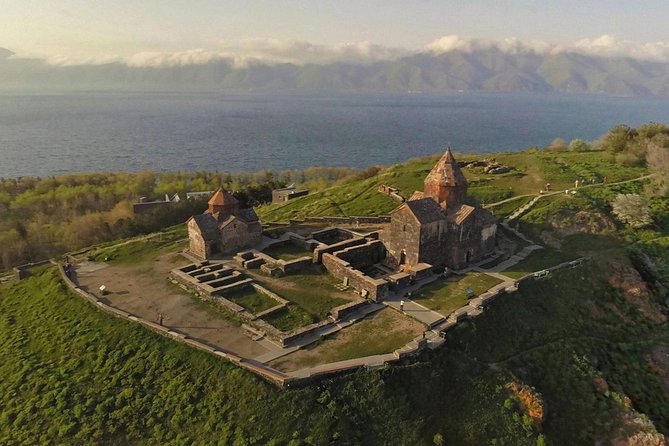
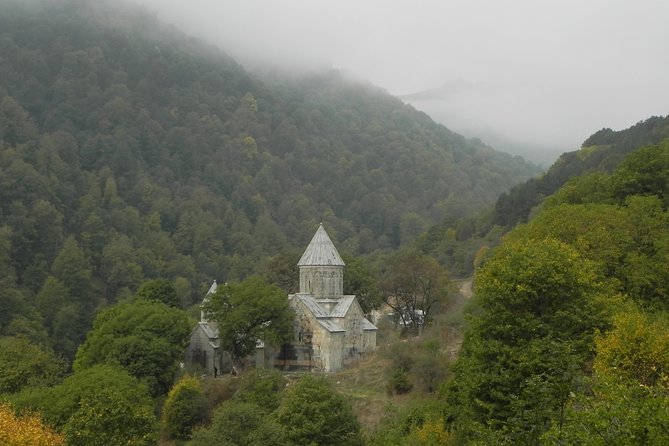
- Lake Sevan and Dilijan in one day: Sevanavank, Haghartsin, and Goshavank give you water, forest, and medieval religious sites in a single outing.
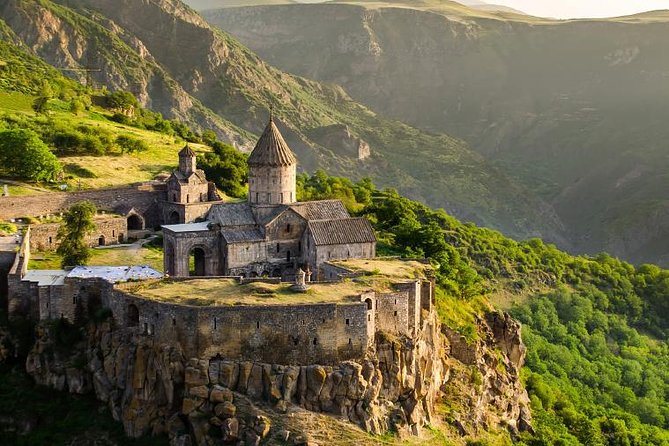
- Garni and Geghard together: This is one of Armenia’s most rewarding pairings, combining a surviving pagan temple with a monastery carved into rock.
- A serious church-and-fortress day: Day six includes Ashtarak’s colored churches, Saghmosavank, Oshakan, and Amberd Fortress.
- Yerevan is more than a starting point: The Cascade, ARARAT Museum, Parajanov Museum, Erebuni Museum, and Vernissage Market give the capital real substance.
- Small-group scale: The maximum group size is 30 people, large enough for a social outing but not an intimate private tour.
- Simple booking terms: Pickup is offered, the ticket is mobile, English is available, and cancellation is free up to 24 hours before the start time.
What the $885.13 price buys you
At $885.13 per person, this tour is best judged as a packaged sightseeing program rather than a simple guided walk. Seven days of transport between Yerevan, Lake Sevan, Dilijan, Gyumri, Ashtarak, Garni, Geghard, Oshakan, and Mount Aragats can add up quickly if arranged separately. Admissions are included at the listed museums, churches, monasteries, and temples, which adds useful value.
Still, check exactly what is not included before you commit. The information provided does not list hotels, meals, drinks, or personal expenses. The brandy tasting at the ARARAT Museum is specifically included, but that does not tell you whether other food or drinks are covered.
I would also ask how the seven days are scheduled, how much driving is involved, and whether the same vehicle and guide remain with you throughout. The tour is offered in English, but no guide names are supplied. That matters if personal contact with a particular guide is important to you.
The group limit is 30. That is a reasonable ceiling for a multi-day coach-style trip, though you should not expect the flexibility of a private excursion. If you want to stop often for photographs or linger at a church, the group schedule may win over your preference.
A few more Yerevan trips to weigh up
- The Great Beauty of Armenia: 7-Day Culture and Cuisine Tour
★ 5.0 · 35 reviews
Day one: Yerevan from the Cascade to Armenian brandy
The tour begins in the center of Yerevan at the Cascade Complex, a broad stairway facing the Opera House. Seven elevators run inside the structure, though the top is the real prize. From the highest point, you get a view across the city and, when conditions allow, toward the surrounding mountains.
Give yourself a little energy for the stairs, even though elevators are available. The Cascade works well as an introduction because it shows Yerevan as a planned capital with public art, open space, and strong city views. The listed visit lasts about an hour.
Next comes the ARARAT Museum, where you taste Armenian cognacs of different ages. This is a useful stop because brandy is tied closely to the country’s international image, and the tasting gives you something sensory after the architectural sightseeing.
Drink carefully if the tasting takes place early in the day. The schedule also includes a walk along Mesrop Mashtots Avenue, where you see central Yerevan’s architecture and get a feel for the city beyond the main monument. This first day is light enough to help you settle in, though it does not include a full survey of Yerevan’s food scene or neighborhoods.
Day two: Armenia’s Christian center and Zvartnots
Day two focuses on major religious landmarks. The Holy Archangels Church is described as a central religious and administrative site of the Armenian Apostolic Church, with roots connected to Gregory the Illuminator and the early Christian period. The description also refers to the nearby Saint Hripsime monastery, built in 618.
This stop is valuable for placing Armenian Christianity in context. Armenia is widely associated with its early adoption of Christianity, and these sites help connect that story with actual buildings and worship spaces. Expect a more focused visit than a broad city tour, with the emphasis on religious history and architecture.
The second stop is Zvartnots Temple, built during the seventh century under Catholicos Nerses III. Construction took place over many years, beginning in the 640s. It is an archaeological and architectural site rather than a complete church, so you will be reading the surviving structure and imagining its original scale.
Both the Holy Archangels Church and Zvartnots are listed with included admission. Since each stop is allocated about an hour, listen closely to the guide if you want the chronology to make sense. The stones alone do not explain why these places mattered.
Day three: Sevanavank, Haghartsin, and Goshavank
Lake Sevan is one of Armenia’s signature sights. At high elevation, its clear blue water gives the day a change of pace from Yerevan’s streets and the country’s stone churches. Sevanavank Monastery sits beside the lake and is the main focus of the visit.
The lake is described as the second-highest large lake in the world, and the setting is the point here. Bring a layer of clothing, since elevation can make conditions feel different from Yerevan. The program allows about an hour at Sevanavank, enough for the monastery and views but not a long lakeside outing.
From Sevan, the route continues toward Dilijan and Haghartsin Monastery. Haghartsin served as a religious and educational center from the tenth through thirteenth centuries. Its wooded setting gives it a different character from the open, exposed position of Sevanavank.
Goshavank completes the day. In the twelfth and thirteenth centuries, it became an important religious and scholarly center under Mkhitar Gosh, known for work in scholarship, law, and science. I like this pairing because you get more than pretty stonework. You see how monasteries functioned as places of study and organized religious life.
The limitation is travel time. Three separate sites across Sevan and the Dilijan area require movement between stops, and the one-hour visits can feel short if you want to explore the surroundings. This day suits you if you prefer a strong collection of sights over a relaxed afternoon in one town.
Same highlands, a completely different kind of day:
- Group Tour: Garni, Symphony of Stones, Geghard, Lavash Baking
★ 5.0 · 1,042 reviews - Group Tour: Lake Sevan (Sevanavank), Dilijan (Goshavank, Haghartsin)
★ 5.0 · 1,036 reviews - Garni & Geghard Small-Group Day Trip with Lavash Baking
★ 4.8 · 881 reviews - Khor Virap, Noravank and Birds’ Cave Trip with Wine Tasting
★ 4.8 · 845 reviews
Day four: Gyumri’s old streets and northern monasteries
Gyumri brings a more urban and human scale to the tour. The main square and old streets show buildings made with colorful stone, carved decoration, and varied architectural details. Some structures survived the devastating 1988 earthquake, giving the city’s historic center a particular poignancy.
The description of old Gyumri evokes blacksmiths, carts, and a working city, but you should think of this as a walking introduction rather than a full city exploration. One hour is enough to notice the streets and building styles, not enough to absorb Gyumri’s cultural life in depth.
Marmashen Monastery sits on the left bank of the Akhurian River. Built between 988 and 1029, its five churches are linked to the Ani school of medieval Armenian architecture. This is a good stop for readers who enjoy comparing regional building styles, especially since the setting beside the river adds space and quiet.
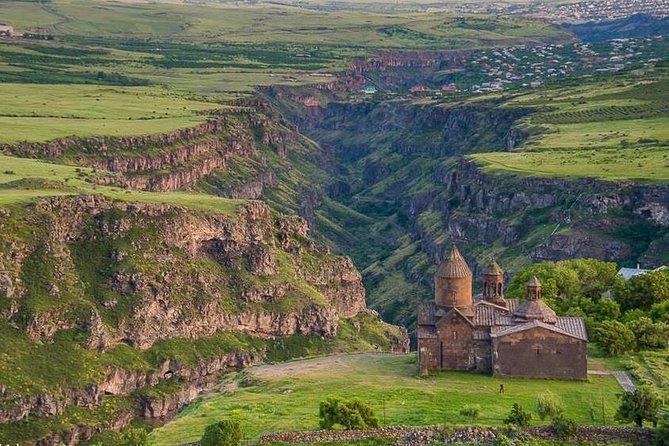
Harichavank comes next, on the western slope of Mount Aragats. The complex began in the seventh century, while its main church dates to the thirteenth century. In the nineteenth century, it served as a summer residence for Armenian Catholicoses.
One unusual feature is the small chapel perched on a piece of rock that split from the main cape during an earthquake. It now rises above the canyon. That detail gives Harichavank a memorable visual hook, even for visitors who are beginning to feel monastery fatigue.
Day five: Garni’s pagan past and Geghard’s rock-cut rooms
Day five is one of the strongest parts of the program. On the way to Garni, you stop at Charents Arch for a view over the Ararat Valley and toward Mount Ararat. The view depends on weather and visibility, but the stop provides a useful pause before the main sites.
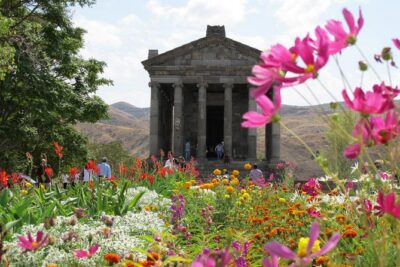
Garni Temple is the only surviving temple in Armenia from the pagan and Hellenistic era. It was dedicated to Mithra, the pagan sun god, and was built in 76 BC by Greek slaves. It later served as a summer residence for Armenian kings for more than four centuries.
Garni matters because it broadens your picture of Armenia. The country is not only a destination of early Christian monasteries. This temple links Armenia to older pagan traditions and to the wider Hellenistic world. The visit lasts about an hour and includes admission.
Then comes Geghard, one of the most striking religious complexes on the route. Its name refers to the lance associated with the biblical account of Christ’s crucifixion. The lance was kept here for a long period before being moved to the museum at Echmiadzin Cathedral.
The monastery’s present buildings date mainly from the tenth through thirteenth centuries. The main church was built in 1215, while Avazan Church, from 1283, is cut directly into solid rock. You pass through a portico toward another church deeper inside the stone, with medieval dwellings and khachkars around the complex.
Geghard rewards close attention to sound and space. Its acoustics are part of the reason the site feels different from a freestanding church. Allow time to look upward, into the carved surfaces, and outward toward the surrounding caves. The one-hour listing is workable for a guided introduction, but you may wish it were longer.
Day six: Ashtarak, Saghmosavank, Oshakan, and Amberd
Day six is the marathon. It includes eight stops, so prepare for a long day with frequent short visits. The reward is variety, but the schedule is not designed for lingering.
You begin in Ashtarak with Tsiranavor Church, whose name means apricot-colored church. It is a partly ruined fifth-century building at the edge of a gorge. Karmravor Church follows, its name meaning red-colored, and dates to the seventh century.
Spitakavor Church of Ashtarak means white-colored church. It is a partly ruined thirteenth-century building, also placed near a gorge. Seeing the three churches together gives you a memorable color-based way to distinguish them, although the quick sequence may make the details blur.
The 1664 Ashtarak Bridge crosses the Kasagh River with three arches of unequal size. The area beneath and around it is suitable for a picnic, but the schedule does not specify a picnic stop. Treat it as a scenic historical pause rather than assuming a meal is provided.
Saint Gevorg Church was built to hold remains associated with Saint George, known as the Slayer of Dragons. Inside are religious frescoes from the seventeenth century. This is a more intimate stop than a major monastery, and the frescoes give you a reason to look beyond the exterior.
Saghmosavank, a thirteenth-century Armenian Apostolic church, is known for its acoustics. Its name comes from saghmos, a spiritual song sung by Armenian clergy. If the building is quiet, you may notice why sound is part of its identity.
At Oshakan, Saint Mesrop Mashtots Cathedral marks the burial place of Mesrop Mashtots, creator of the Armenian alphabet. This is one of the most culturally important stops on the full itinerary because the alphabet is central to Armenian identity, literature, and church tradition.
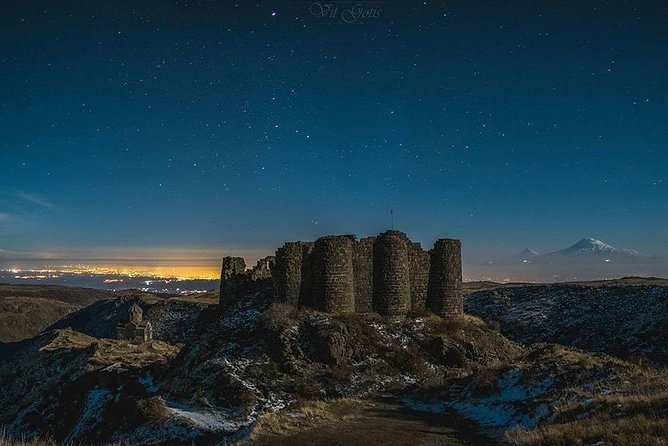
The final stop is Amberd Fortress, about 2,300 meters above sea level on the slopes of Mount Aragats. The fortress sits where the Arkashen and Amberd rivers meet and served as a refuge for Armenian kings during wartime. Weather and access conditions can matter at this altitude, so keep a jacket handy and expect a more rugged setting than in central Yerevan.
Day seven: Parajanov, Erebuni, and shopping for handmade work
The final day returns to Yerevan and gives you three different ways to understand the capital.
The Parajanov Museum honors the Armenian filmmaker whose work included assemblages, flat and three-dimensional collages, drawings, dolls, and film sketches. This is a good choice for you if you enjoy unusual museums and visual art rather than only traditional historical displays. The collection focuses on imagination and materials, not a standard chronological survey.
The Erebuni Museum covers the foundation of Yerevan and sits at the foot of Arin Berd hill, where the Urartian fortress Erebouni was built. This stop reaches further back than the city’s modern streets and helps explain why Yerevan is often presented as an ancient city with a modern capital layered over it.
The tour ends at Vernissage Market, an open-air market where local makers sell handmade work. It is the natural place to look for a small keepsake, though you should compare items and prices before buying. Since admission is free, you can focus on browsing rather than treating it as a formal museum visit.
Who will get the most from this itinerary?
I would choose this tour if you want a first, wide-ranging introduction to Armenia and prefer having the routes, admissions, and major stops organized for you. Families may also find it useful. The program includes enough variety to keep children interested, from a fortress and lake to rock-cut chambers, unusual art, and a market.
It also suits history and architecture fans who want to see many churches in a short period. The tradeoff is repetition. By the sixth day, several stone churches and monasteries may begin to blend together unless you take notes or pay close attention to the differences in setting, period, and purpose.
The tour is not the best match if you want long meals, village stays, hikes, or extended time in Gyumri and Dilijan. The schedule favors coverage. You see much of Armenia, but you do not settle deeply into any one place.
Pickup is offered, public transportation is nearby, and most people can participate. The maximum group size is 30. Confirmation is provided when you book, and the mobile ticket is convenient for a multi-day program.
Should you book the seven-day Armenia tour?
Book it if you value breadth, practical organization, and a strong concentration of historic sites. Garni and Geghard alone make the program appealing, while Lake Sevan, Gyumri, Amberd, and Yerevan’s museums give the week needed variety.
Before paying, confirm the hotel, meals, daily departure times, transport arrangements, and guide details. The $885.13 price can be solid value if those services are part of your package, but admissions alone do not explain the entire cost.
I would especially recommend it for a first visit, families, and anyone who does not want to arrange a string of day trips independently. If you already know Armenia or prefer a slower pace, choose a shorter, more focused trip instead. Free cancellation is available up to 24 hours before the start time, which gives you a useful window to check those details.
FAQ
Where does the tour begin?
The tour is based in Yerevan, Armenia. Pickup is offered.
How long does the tour last?
The experience lasts approximately seven days.
What language is offered?
The tour is offered in English.
How much does the tour cost?
The listed price is $885.13 per person.
What is the maximum group size?
The tour allows a maximum of 30 participants.
Are admission tickets included?
Admission is listed as included for the ARARAT Museum, Holy Archangels Church, Zvartnots Temple, Sevanavank, Haghartsin Monastery, Goshavank Monastery, Gyumri Main Square, Marmashen Monastery, Harichavank Monastery, Garni Temple, Geghard Monastery, the churches and sites on day six, the Parajanov Museum, and the Erebuni Museum. The Cascade and Vernissage Market are listed as free.
Is the ticket available on a phone?
Yes. A mobile ticket is offered.
What is the cancellation policy?
You can cancel at least 24 hours before the experience start time for a full refund. Cancellations and changes made less than 24 hours before the start time are not accepted for a refund.
Just added around Yerevan
- Yerevan: Garni, Geghard, Lake Sevan & Dilijan Day Trip★ 3.0 · 12 reviews
- Winter Special – Tsaghkadzor, Kecharis, Abovyan & Lake Sevan★ 4.0 · 10 reviews
- Private Yerevan City Tour with museums★ 5.0 · 5 reviews
- Yerevan Walking Tour★ 5.0 · 3 reviews
- Yerevan City Tour★ 5.0 · 9 reviews
- Group Tour: Sightseeing and walking tour in Yerevan★ 5.0 · 3 reviews
- Unlock the Yerevan City (Walking Tour)★ 5.0 · 3 reviews
- Vayots Dzor Areni Wine Route★ 3.5 · 3 reviews
Tours, compared.
Group Tour: Garni, Symphony of Stones, Geghard, Lavash Baking
Read our review →
Group Tour: Lake Sevan (Sevanavank), Dilijan (Goshavank, Haghartsin)
Read our review →
Group tour: Khor Virap, Noravank, Areni Winery and Cave
Read our review →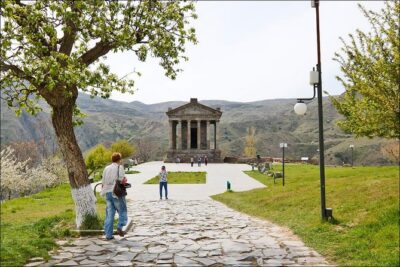
Group Tour: Garni pagan temple, Geghard monastery, Lake Sevan, Sevanavank
Read our review →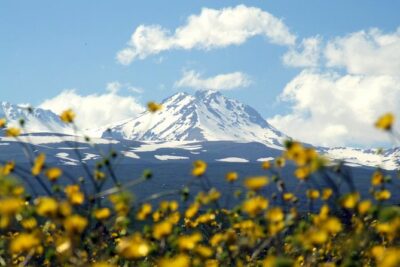
Group Tour: Amberd, Aragats, Lake Kari, Saghmosavank, Alphabet
Read our review →
Group Tour: Echmiadzin Cathedral & churches, Zvartnots Temple
Read our review →
Cultural Walking Tour in Yerevan with Armenian food Tastings
Read our review →
Group Tour: Khor Virap, Garni temple, Geghard, Lavash baking
Read our review →Browse the lists this tour appears in