
Reviewed · FOOD & DRINK
Cultural Walking Tour in Yerevan with Armenian food Tastings
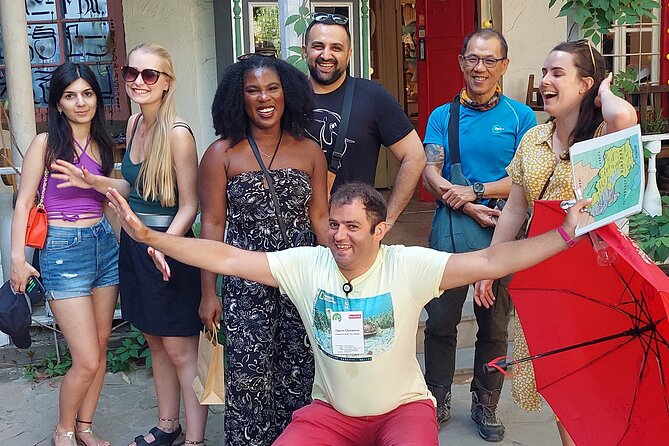
Yerevan makes the most sense on foot, and this tour links its grand central squares with quieter lanes, cultural stops, markets, and the Cascade. Along the way, Tigran and Ioanna bring different personalities to the storytelling, with history, humor, maps, and photographs helping you place Armenia in its wider setting.
I like the mix of local food tastings and major sights, especially the chance to try sea buckthorn juice at Charles Aznavour Square. I also like the route’s range: Soviet monuments, Armenian cross-stones, designer carpets, a photography library, the Opera, and contemporary art all appear in one afternoon.
The main consideration is the pace and length. Four hours and about 4 kilometers is reasonable for most people, but some of the history stops can feel long, and one weak experience involved a guide speaking too softly near traffic. Ask for clear, audible explanations if needed.
Key points to know before you book
- A useful first look at Yerevan: The route begins at Republic Square and ends at the Cascade, covering many central sights without requiring you to plan the connections yourself.
- Food is part of the tour: Tastings include local snacks and sea buckthorn juice, with enough food for some people to count as a light lunch.
- History comes thick and fast: Expect discussion of Armenian culture, Soviet Armenia, geopolitical events, the Armenian Genocide, and changing architectural styles.
- The walk covers about 4 kilometers: Good walking shoes and a little stamina will make the afternoon more enjoyable.
- Guides shape the experience: Tigran is praised for energy, maps, humor, and historical detail, while Ioanna is described as warm, clear, and attentive.
- The group can reach 35 people: That keeps the cost down, but it may make it harder to hear in busy streets.
Why this Yerevan walk works as a first-day plan
This is a city-orientation tour with food and context attached. You start at the Singing Fountains in Republic Square and finish beside the Alexander Tamanyan statue at the Cascade, so the route gives you a clear westward path through central Yerevan.
I like that the walk is not limited to famous facades. You get public squares, monuments, markets, a library, a carpet showroom, cross-stones, a theater, and an art center. That range helps you see Yerevan as a living capital rather than a string of photo stops.
The tour is offered in English, and the guides used on different departures include Tigran and Ioanna. Tigran’s strongest qualities are his enthusiasm, historical explanations, use of maps and pictures, and ability to keep a group engaged. Ioanna brings a warm, friendly approach and has been praised for taking the group through both familiar places and less obvious corners.
The route is listed at about four hours. One participant estimated roughly 4 kilometers, which gives you a useful sense of the physical demand. This is not a strenuous hike, but it is a real walking tour, with time spent standing while the guide explains monuments and events.
A few more Yerevan trips to weigh up
- Khor Virap, Noravank and Birds’ Cave Trip with Wine Tasting
★ 4.8 · 845 reviews - Khor Virap, Noravank & Birds’ Cave Day Trip with Wine Tasting
★ 5.0 · 320 reviews - Tatev & Shaki Waterfall Guided Group Tour with Wine Tasting
★ 5.0 · 266 reviews
Republic Square and the Soviet shape of Yerevan
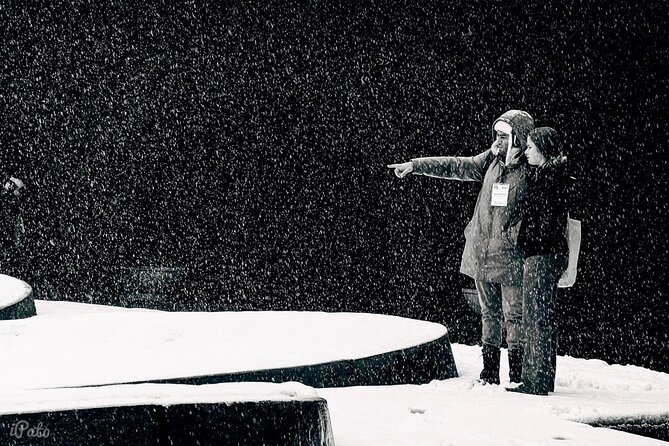
Republic Square is the right place to begin. Its broad oval form, pink and tan stone, and central pattern shaped like a traditional Armenian rug introduce the look of Yerevan immediately.
You have about 30 minutes here. The square is more than a grand civic space. It helps explain how the modern center was planned and how Armenian stone gives the city much of its visual character.
From here, the walk continues to the statue of Stepan Shahumyan. This monument was the first officially installed in Yerevan, created by sculptor Sergey Merkurov and architect Ivan Zholtovsky. The stop is brief, around 15 minutes, but it gives the guide a natural opening to discuss the Soviet period and the political forces that shaped the capital.
If you want a broad introduction to Yerevan’s architecture, listen closely during these early stops. The guide discusses changes from buildings dating before 1920, including structures with wooden balconies, to the stone-heavy Soviet style. The experience is strongest when you treat these details as a way to read the city around you.
Mirzoyan Library and the city’s creative side
The Mirzoyan Library is a quieter change of mood. It holds books and journals connected with design and photography, and it includes a bar and gallery.
You get about 30 minutes here. This is a good stop for anyone interested in visual culture, photography, or the places where local creative life takes shape. It also gives your feet a short break from open squares and street walking.
The limitation is that the tour does not promise a long, formal museum visit. Think of the library as a cultural pause and a chance to hear about Yerevan’s creative scene, not as a full gallery tour.
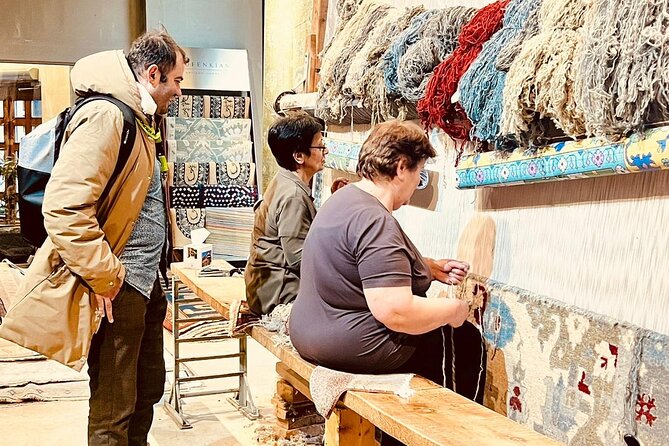
Next comes Tufenkian Heritage Hotels, associated here with designer carpets and hand-crafted rugs in different styles. The stop lasts about 30 minutes and adds a distinctly Armenian craft element to the route.
Carpets can tell you a great deal about place, taste, trade, and household life. This stop is especially useful if you want to buy or examine Armenian rugs later in your trip. Since admission is included, you can see the setting without adding another ticket to your budget.
Vernissage Market, national memory, and Armenian identity
The Vernissage section brings several subjects together. You see the statue of Garegin Nzhdeh, an Armenian national hero, and hear about Armenia’s geopolitical situation and key historical events from the 19th century onward.
The route also includes the Cultural Genocide Park, where you can see khachkars, or Armenian cross-stones. These carved stone memorials often include crosses, rosettes, interlaced patterns, and plant forms. They are a major part of Armenian medieval art, and seeing them in person makes the subject easier to understand than a quick paragraph in a guidebook.
The stop also includes discussion of the Republic Square Metro station and Armenian metro system. That may sound like a small detail, but public transport can reveal how a city works and how its Soviet infrastructure remains part of daily life.
This is one of the most information-heavy parts of the afternoon. The subjects are serious and broad, moving from national heroes to political geography, cultural loss, and public art. If you prefer a light sightseeing walk with only short explanations, this section may feel dense.
Same highlands, a completely different kind of day:
- Group Tour: Garni, Symphony of Stones, Geghard, Lavash Baking
★ 5.0 · 1,042 reviews - Group Tour: Lake Sevan (Sevanavank), Dilijan (Goshavank, Haghartsin)
★ 5.0 · 1,036 reviews - Garni & Geghard Small-Group Day Trip with Lavash Baking
★ 4.8 · 881 reviews - Yerevan: Garni, Geghard, Symphony of Stones & Lavash Baking
★ 4.8 · 758 reviews
Charles Aznavour Square and the sea buckthorn tasting
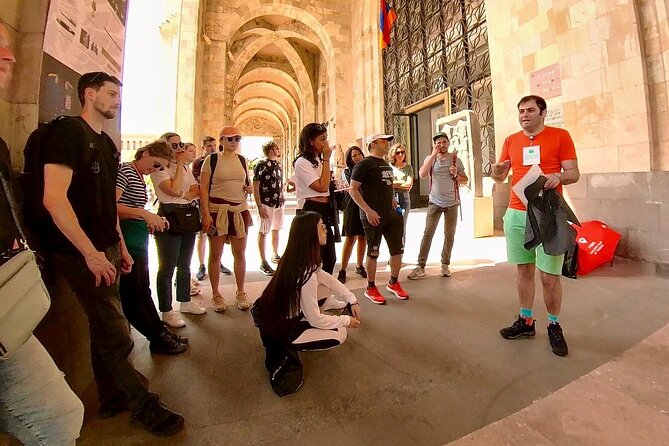
Charles Aznavour Square offers a pleasant pause. You see the Grand Hotel Yerevan, opened in 1926 and described as the city’s oldest hotel. Its facade uses richly decorated black Armenian tuff, a volcanic stone closely tied to the country’s architecture.
The stop lasts about 15 minutes and includes sea buckthorn juice. This bright, tart drink has been used for food, traditional medicine, and skin treatment across places including China, Russia, and northern Europe.
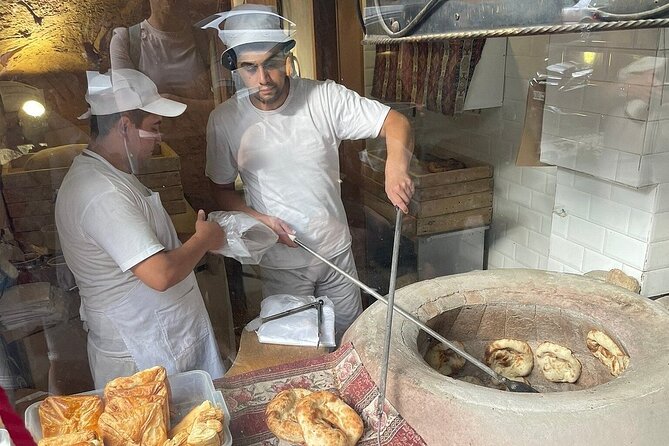
I like this tasting because it is more specific than a generic snack break. It gives you a small piece of regional food culture and a flavor you may not order on your own. The food portions vary by departure, but the tasting has been enough for some people to count as a light lunch.
Do not book this expecting a full meal. The food supports the walking rather than replacing lunch, so plan another meal if you normally eat a substantial midday spread.
Missak Manouchian Park and the meaning of khachkars
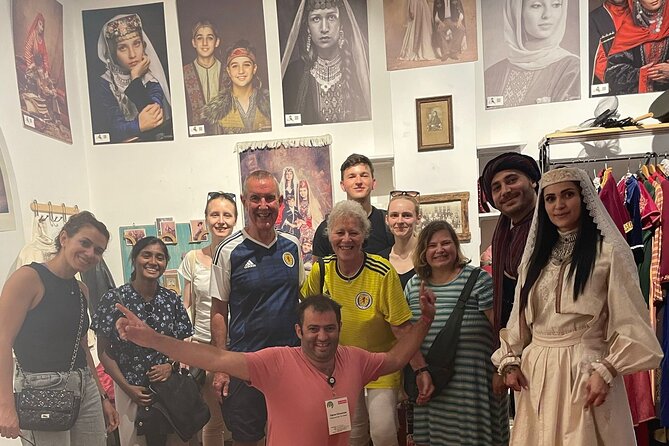
The route continues through Missak Manouchian Park, with another chance to look closely at Armenian cross-stones.
A khachkar is not simply a stone with a cross carved into it. The surrounding patterns can include circular rosettes, woven lines, and botanical shapes, all worked into a memorial form. The guide uses this stop to explain early medieval Armenian art and the role of stone carving in Armenian identity.
This kind of stop is valuable because it slows the route down. You are not just collecting landmarks. You are learning to notice a recurring symbol and understand why it appears across Armenia.
Opera and Ballet Theater, a grand Soviet-era landmark
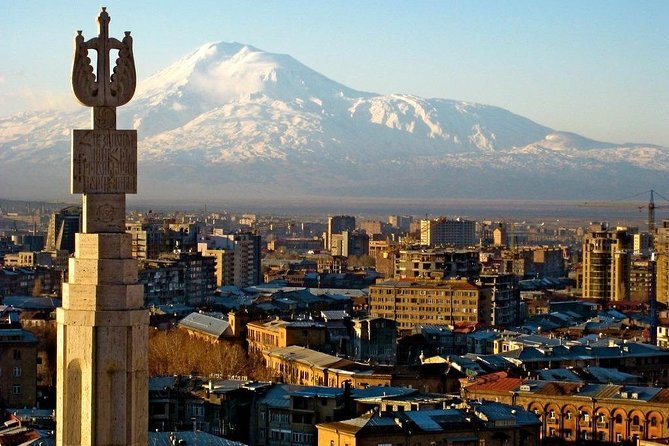
The Armenian National Academic Theater of Opera and Ballet, named for Alexander Spendiaryan, receives about 30 minutes.
Construction began on November 28, 1930, during celebrations marking the tenth anniversary of Soviet Armenia. The building opened officially on January 20, 1933. Those dates give the guide a clear way to connect architecture with the political history of the period.
The theater is also a useful counterpoint to Republic Square. Both places show how public buildings were used to express civic ambition, but the Opera area has a more open, ceremonial feel. Your guide may also connect the site to the changing design of Yerevan and the work of major Armenian architects.
The tour does not include a performance, so the value here is the exterior setting and explanation. If you want to see the interior or attend a concert, you will need to arrange that separately.
The Cascade and Cafesjian Center for the Arts
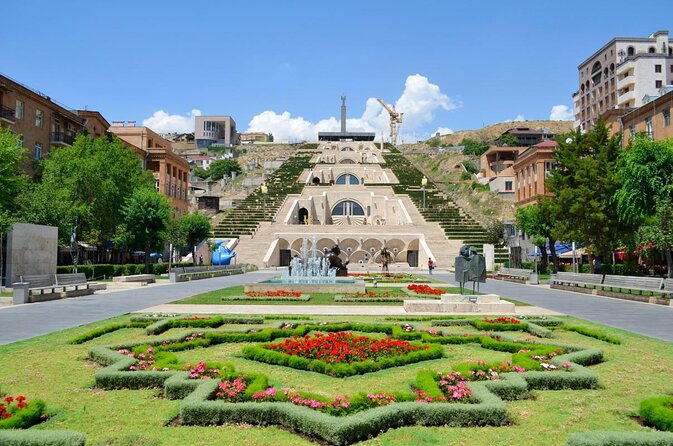
The final major stop is the Cascade, where the tour ends next to the Alexander Tamanyan statue on Moskovyan Street.
The Cascade is a huge stairway complex with fountains. The Cafesjian Center for the Arts uses the site to present contemporary art in Armenia and Armenian culture to an international audience. The planned stop lasts about 15 minutes, though the route ends here and you can continue exploring on your own.
Ending at the Cascade is practical. You finish at one of Yerevan’s most recognizable public spaces, with a clear chance to linger, take photographs, or decide what to visit next. It also gives the walk a visual finish after the denser history discussions earlier in the day.
Because the official stop is short, do not expect a full examination of every artwork or staircase section. The tour introduces the area. You can return later if the Cascade becomes one of your favorite parts of Yerevan.
Food, pacing, and what four hours really feels like
The advertised duration is approximately four hours, and the route includes many stops with their own explanations. The walk is paced rather than rushed. That is helpful when you want context, but it can be tiring if you prefer to move quickly between landmarks.
One important practical issue is sound. Yerevan’s central streets can be noisy, and a group of up to 35 people can spread out. Most departures appear to work well when the guide keeps the group together and projects clearly, but you should speak up if you cannot hear.
Tigran has been praised for his energy, humor, punctual timing, maps, and historical detail. Ioanna has been praised for her friendly manner, strong explanations, and willingness to adjust arrangements when a participant needed a different date. Since the guide may vary, the tone can change from one departure to another.
The food makes the long walk easier. Local snacks and sea buckthorn juice add a welcome break, and some people find the portions sufficient for a light lunch. Still, food needs vary, so I would not skip breakfast or assume this is a full meal.
Is the $55 price fair?
At $55 per person, this is not the cheapest way to walk around central Yerevan. You can see Republic Square, the Opera, Vernissage, and the Cascade on your own for little or no admission cost.
The value comes from the guide and the structure. You are paying for four hours of explanation, a planned route, cultural stops that are easy to overlook, and included tastings. If you have only a short stay, that combination can save planning time and help you understand what you are seeing.
The price works best for a first visit. A strong guide can give you a usable map of the city, explain Armenian references that may otherwise pass unnoticed, and point out places worth returning to. It works less well for someone who already knows central Yerevan or wants a short, architecture-only walk.
The 98 percent recommendation rate and 4.9 rating from 334 ratings suggest that the format usually works well. I would still read the details honestly: the tour is group-based, can include extended explanations, and depends on a guide who is easy to hear in street noise.
Who should book this walking tour?
I would choose it if you want a first-day introduction to Yerevan that combines landmarks with Armenian history and food. It suits curious walkers who enjoy questions, stories, and connections between monuments.
It is also a good fit if you are traveling alone and want a social setting. The group size can reach 35, so it is not intimate, but a shared walk can make it easier to meet people during a short stay.
You should think twice if you dislike long talks at outdoor sites, have trouble walking for four hours, or want detailed time inside museums. The route is broad rather than specialized, and some sections may feel slower than expected.
Free cancellation is available until 24 hours before the start time. The tour requires good weather and a minimum number of participants, so a cancellation caused by weather or low enrollment leads to a different date or a full refund.
Should you book it?
Book this tour if you want to get your bearings quickly and understand why Yerevan looks and feels the way it does. The combination of Republic Square, Soviet monuments, khachkars, carpets, the Opera, the Cascade, and local tastings gives you a useful cultural base for the rest of your stay.
Skip it if you prefer to wander alone, already know the central sights, or want a compact two-hour overview. For most first-time visitors with decent walking stamina, the $55 cost is reasonable, especially when you value a guide who can turn scattered landmarks into a connected story.
FAQ
Where does the Yerevan walking tour start?
The tour starts at the Singing Fountains in Republic Square, Yerevan.
Where does the tour finish?
It ends at the Cascade on Moskovyan Street, next to the Alexander Tamanyan statue.
How long does the tour last?
The tour lasts approximately four hours.
How far do you walk?
The walking distance is about 4 kilometers, based on the experience details.
What language is the tour offered in?
The tour is offered in English.
What food and drink are included?
The tour includes local food tastings and sea buckthorn juice at Charles Aznavour Square. The tastings may provide a light lunch for some people, but they are not described as a full meal.
Is admission to the stops included?
The listed stops have free admission. The tour focuses on outdoor sights and cultural locations along the walking route.
How large can the group be?
The maximum group size is 35 participants.
Can I cancel for a full refund?
Yes. You can cancel at least 24 hours before the experience start time for a full refund. Cancellations or changes made less than 24 hours before the start time are not refunded or accepted.
More Walking Tours in Yerevan
- Private sightseeing and walking tour in Yerevan
★ 5.0 · 78 reviews - Yerevan Private Walking Food Tour
★ 5.0 · 31 reviews - Walking Yerevan City Tour with 5 Wine & 10 years-old brandy
★ 5.0 · 17 reviews - Budget walking tour in Yerevan (Yerevan city tour)
★ 5.0 · 4 reviews
Just added around Yerevan
- Yerevan: Garni, Geghard, Lake Sevan & Dilijan Day Trip★ 3.0 · 12 reviews
- Winter Special – Tsaghkadzor, Kecharis, Abovyan & Lake Sevan★ 4.0 · 10 reviews
- Yerevan City Tour★ 5.0 · 9 reviews
- Private Yerevan City Tour with museums★ 5.0 · 5 reviews
- Yerevan Walking Tour★ 5.0 · 3 reviews
- Group Tour: Sightseeing and walking tour in Yerevan★ 5.0 · 3 reviews
- Unlock the Yerevan City (Walking Tour)★ 5.0 · 3 reviews
- Vayots Dzor Areni Wine Route★ 3.5 · 3 reviews
Food & Drink, compared.
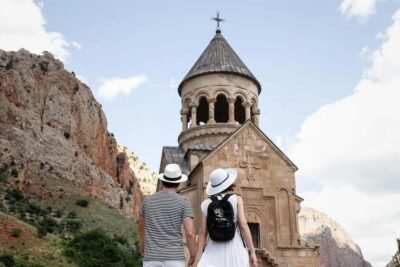
Khor Virap, Noravank and Birds’ Cave Trip with Wine Tasting
Read our review →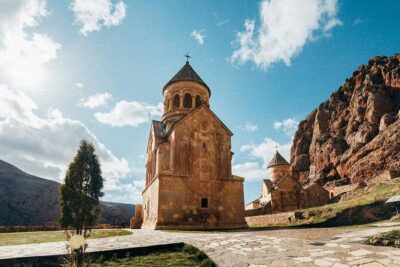
Khor Virap, Noravank & Birds’ Cave Day Trip with Wine Tasting
Read our review →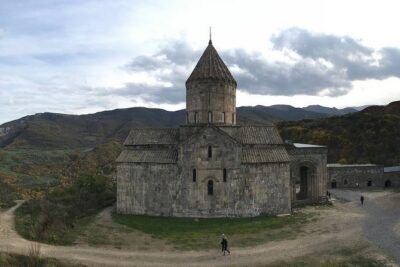
Tatev & Shaki Waterfall Guided Group Tour with Wine Tasting
Read our review →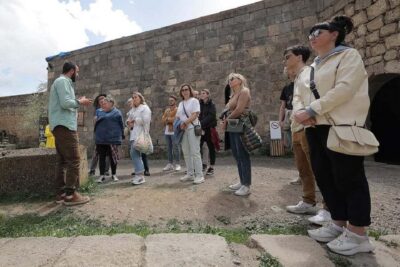
Tatev Day Trip with Shaki Waterfall & Wine Tasting
Read our review →
Group tour: Khor Virap, Noravank, Jermuk, Areni wine tasting
Read our review →
Tour Transfer to/from Tbilisi with Lake Sevan & Wine tasting
Read our review →
Private tour to Khor Virap, Hin Areni wine factory (tasting), Noravank, Jermuk
Read our review →Browse the lists this tour appears in