
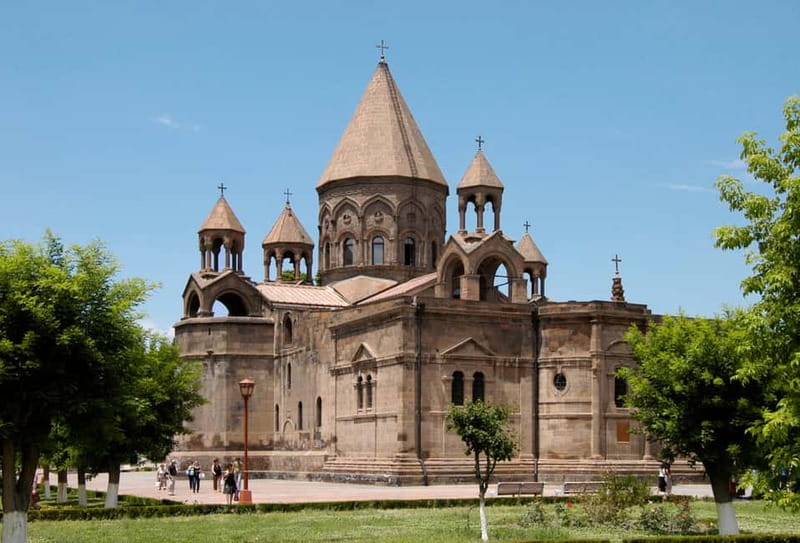
Reviewed · ECHMIADZIN AND ZVARTNOTS TOURS
Yerevan: Echmiadzin, Hripsime, Gayane, Zvartnots Temple Tour
Armenia’s Christian story becomes easier to understand when you see its churches in one sweep. This four-hour trip from Yerevan links Etchmiadzin, the country’s spiritual center, with three important churches and the broken remains of a seventh-century cathedral.
I like the efficient route and the fact that entrance fees, transport, and a professional guide are included for $20 per person. I also like the mix of active religious sites and open-air ruins, which gives you more than a string of similar stone buildings. The main catch is timing: Sunday services can limit access, and one recent booking finished in about three hours with only three of the four planned stops.
Key points at a glance
- Four major Armenian sites in four hours: Saint Hripsime, Etchmiadzin Cathedral, Saint Gayane, and Zvartnots Cathedral.
- The spiritual center of Armenia: Etchmiadzin is home to the Mother See of Holy Etchmiadzin, one of the world’s oldest Christian cathedrals.
- UNESCO-listed church architecture: Saint Hripsime and Saint Gayane offer two important examples of Armenia’s distinctive stone-built church style.
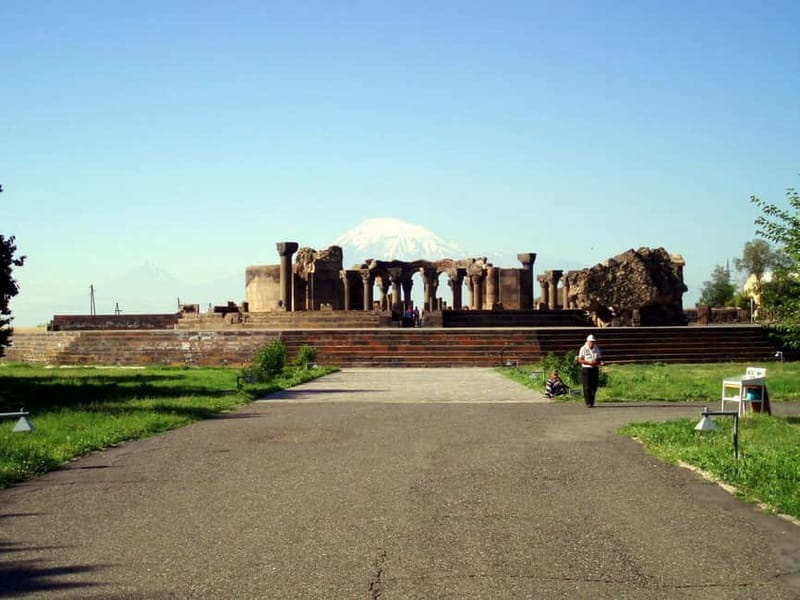
- A cathedral in ruins: Zvartnots gives you carved stone remains, open space, and views toward Mount Ararat.
- Good value at $20: Your guide, coach transport, and entrance fees are included, while food and drinks are not.
- Best practical tip: Avoid Sundays if you want the best chance of entering and viewing the churches during a quiet sightseeing stop.
Why this short Armenia tour works
This is a compact introduction to Armenia outside Yerevan. You are not spending the day on one distant attraction. Instead, you move through a small group of places tied to the country’s Christian identity and architectural development.
The route also has a useful rhythm. Saint Hripsime and Saint Gayane are working churches with intact interiors and a sense of ongoing worship. Etchmiadzin gives you the central religious setting. Zvartnots then changes the mood with its open-air ruins and wide views.
At $20, the value is strong if you want transport and a guide without arranging a half-day trip yourself. Entrance fees are covered, and the air-conditioned coach saves you from sorting out separate rides between sites in Armavir Province.
There are limits. Four hours is enough for an overview, not a slow study of every carving or a long visit at each church. The planned sightseeing times add up to three hours, leaving roughly an hour for driving, meeting, and transitions. A Sunday service can also affect the route. If entering each church matters greatly to you, choose a non-Sunday departure.
More echmiadzin and zvartnots tours in Armenia:
- Group Tour: Echmiadzin Cathedral & churches, Zvartnots Temple
★ 5.0 · 352 reviews - Yerevan: Khor Virap, Garni, Geghard, Echmiadzin, & Zvartnots
★ 4.9 · 192 reviews - Group Tour: Echmiadzin Mother Cathedral, Hripsime, Zvartnots
★ 4.7 · 159 reviews
Meeting the coach near Republic Square
The tour begins in front of the Marriott hotel by Republic Square. The instructions ask you to pass Amiryan Street and meet where the buses and cars are parked.
Give yourself a little extra time to find the exact parking area. The meeting point is described clearly enough, but Republic Square has several streets, hotel entrances, and vehicle areas. Keep your phone available and look for the tour transport rather than waiting only at the hotel doors.
Transport is by air-conditioned coach. That matters in warmer weather, especially since the itinerary includes outdoor walking at Zvartnots and between church grounds. The vehicle also keeps the trip practical for a short schedule, though the information does not specify the group size or coach capacity.
The guide speaks English or Russian. A strong part of the experience is the chance to ask about Armenian culture, traditions, and Christian history along the way. One booking specifically praised the guide’s professional and friendly manner, as well as the clear answers to questions about the country’s customs.
Saint Hripsime Church: 30 minutes with Armenia’s stone architecture
Saint Hripsime is the first sightseeing stop, with about 30 minutes set aside. It is one of the most important early Armenian churches and is listed as a UNESCO site.
The church is known for its Armenian architectural form, built in warm-colored stone with a strong, compact shape. You will notice how much the design depends on geometry, thick walls, and a central dome rather than on heavy decoration. That spare style is part of the appeal. The building feels sturdy and focused, not fussy.
Half an hour is enough to look around, take permitted photographs, and hear the main historical points from your guide. It is not enough for a long architectural study, so pay attention during the explanation and ask your questions while you are there.
The church remains a religious place, not simply a monument. Dress respectfully and be ready for a quieter atmosphere than you might find at a standard sightseeing attraction. Flash photography is not allowed inside the churches.
Etchmiadzin Cathedral: one hour at Armenia’s religious center
The longest stop is Etchmiadzin Cathedral, with about an hour for sightseeing. This is the heart of the tour and the place that gives the route its wider meaning.
The Mother See of Holy Etchmiadzin is one of the world’s oldest Christian cathedrals. For you, that means the visit is about more than a beautiful old building. It is a look at the institution and place that have shaped Armenia’s Christian life for centuries.
Your guide can connect the cathedral to Armenia’s early Christian roots and explain why Etchmiadzin carries such weight in the country. This is where a good guide adds real value. Without context, you may see another stone church with a dome. With context, the site becomes the center point for the other stops.
An hour gives you more breathing room than the 30-minute church visits. You can listen to the history, examine the architecture, and take in the religious setting without rushing every few minutes.
Still, keep your expectations practical. The tour does not promise an extended specialist visit or access to every part of the complex. Religious activity can change what you are able to see. On Sundays, services may be taking place, and that can make sightseeing inside the churches difficult or impossible.
Same highlands, a completely different kind of day:
- From Tbilisi: Day Trip to Armenia Including Homemade Lunch
★ 4.9 · 1,084 reviews - Group Tour: Garni, Symphony of Stones, Geghard, Lavash Baking
★ 5.0 · 1,042 reviews - Group Tour: Lake Sevan (Sevanavank), Dilijan (Goshavank, Haghartsin)
★ 5.0 · 1,036 reviews - Garni & Geghard Small-Group Day Trip with Lavash Baking
★ 4.8 · 881 reviews
Saint Gayane Church: a second UNESCO-listed church
Saint Gayane is the third stop, with approximately 30 minutes of sightseeing. Like Saint Hripsime, it is a UNESCO-listed site and an important example of Armenian church design.
Seeing both churches on the same morning helps you compare them. Look for the shared use of stone, the central structure, and the clean lines that give Armenian churches their distinctive character. The comparison is useful because the two stops are not presented as unrelated buildings. Together, they show how a recognizable architectural language developed and endured.
Thirty minutes can feel short, but it keeps the tour moving. You get time for the main explanation and a quick look around, then return to the coach before the visit becomes repetitive.
Again, Sunday is the key caution. If worship is in progress, the church may not function as an ordinary sightseeing stop. You might be able to observe from a limited area, or the group may need to spend less time inside. Pick another day if interior access is a priority.
Zvartnots Cathedral: ruins with a view toward Mount Ararat
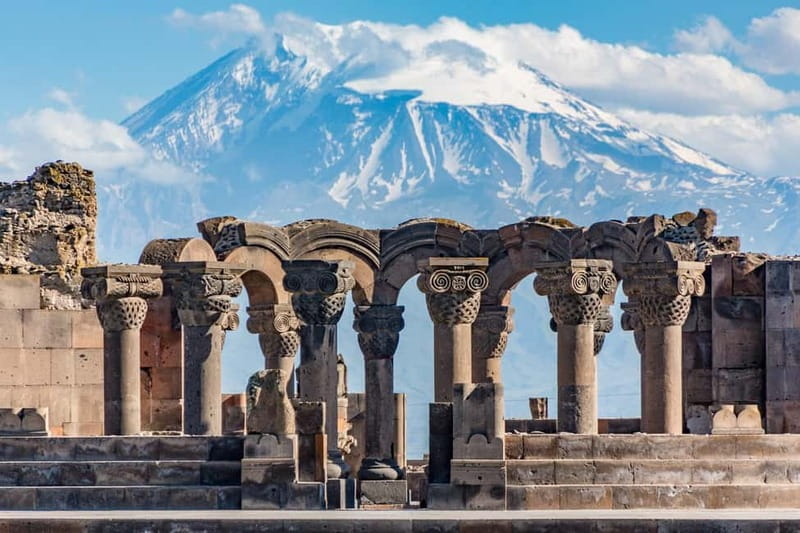
Zvartnots is the final major stop and receives about an hour. The site preserves the remains of a majestic seventh-century cathedral, now in ruins.
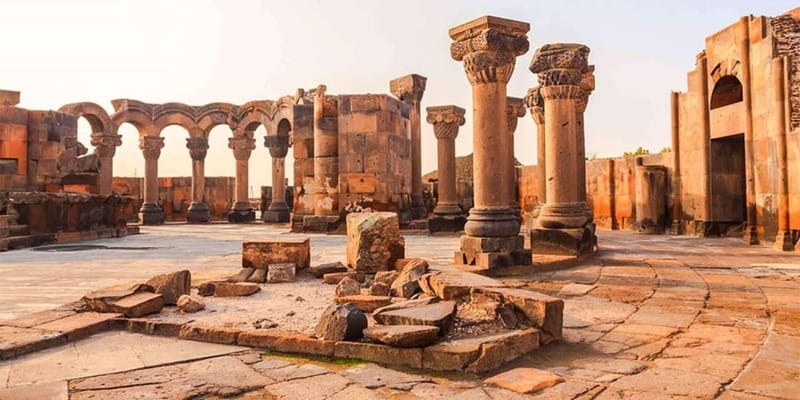
This is the visual change the tour needs. Instead of entering an intact church, you walk among stone foundations, columns, and carved architectural fragments in an open setting. The ruins let you see how a large cathedral was assembled, piece by piece, and how much of its design depended on curves, tiers, and carefully cut stone.
The site also offers panoramic views toward Mount Ararat. Weather matters here. On a clear day, the mountain can add a memorable backdrop to the ruins. On a hazy day, the view may be less dramatic, so do not judge the stop only by the mountain forecast.
An hour is a sensible amount of time. You can hear the story of the cathedral, examine the remains, photograph the exterior, and enjoy the open surroundings. Wear shoes with good soles, since the route includes a moderate amount of walking and the ground around ancient ruins may not be perfectly smooth.
Zvartnots also helps explain why preservation matters. You are not looking at a restored building presented as if time had not touched it. You are seeing what remains of an important structure and using the surviving stonework to picture its former scale.
What the guide adds to the four stops
The guide is not just there to point out the next building. The tour promises explanations of Armenia’s history and its deep Christian roots, and that background is what ties the route together.
At Saint Hripsime and Saint Gayane, you need help noticing the architectural details that make the churches important. At Etchmiadzin, you need the religious context. At Zvartnots, you need an explanation of why a ruined cathedral still matters.
English and Russian are available. No individual guide names are provided, so you cannot request a particular guide in advance based on the supplied information. The strongest available indication is that the guide service can be professional, friendly, and ready to answer questions about Armenian culture and traditions.
Ask questions as you go. This tour is short, and the guide’s explanation may be your best chance to connect the buildings to Armenia’s wider story.
Timing, Sundays, and the one real risk
The advertised duration is four hours, beginning and ending at Republic Square. The planned sightseeing periods are 30 minutes at Saint Hripsime, one hour at Etchmiadzin, 30 minutes at Saint Gayane, and one hour at Zvartnots.
That schedule is fairly tight. It works best if you want a focused half-day and do not need long café breaks or private wandering time. Meals and drinks are not included, and there is no lunch stop listed. One booking specifically appreciated that the tour did not add a lunch stop that felt like a tourist trap. Bring water and a snack if you need one, but do not assume food will be supplied.
The main timing concern is Sunday. A recent booking reported that services made the churches difficult to visit and that the group saw only three of the four planned sites. The same booking lasted about three hours rather than four. That does not prove every Sunday departure will have the same result, but it is a clear reason to avoid Sunday when possible.
You also have some flexibility at booking. Cancellation is free up to 24 hours before departure, and the reserve-now, pay-later option lets you hold a place without paying immediately. Check the available start times because the exact departure time is not fixed in the information provided.
What to bring and who should book
Wear comfortable walking shoes. You will not be hiking, but the tour includes several church grounds and an open archaeological site, with a moderate amount of walking.
A hat, sunscreen, and water are sensible, especially during the outdoor portion at Zvartnots. Bring a camera, but remember that flash photography is not allowed inside the churches. Smoking is not permitted on the activity.
This tour suits you if:
- You have limited time in Yerevan and want a half-day outing.
- You want Armenia’s Christian heritage explained in English or Russian.
- You prefer included transport and entrance fees.
- You enjoy seeing both functioning churches and archaeological ruins.
- You want an affordable introduction before choosing longer trips around Armenia.
It is less suitable if you use a wheelchair or have significant mobility limitations. The activity is not suitable for wheelchair users or people with mobility impairments, and the amount of walking may be tiring if you need frequent assistance.
Should you book this Etchmiadzin and Zvartnots tour?
Book it if you want a low-cost, well-packed introduction to Armenia’s religious architecture beyond Yerevan. The four-site plan gives you variety, the guide adds cultural context, and the included transport and entrance fees make $20 a fair price.
Choose a weekday rather than Sunday if seeing the church interiors is important. Also go in with the right expectations: this is a brisk overview, not a private architectural study. If you want a simple route, practical transport, and a clear introduction to Etchmiadzin, Saint Hripsime, Saint Gayane, and Zvartnots, this tour is a sensible choice.
FAQ
Where does the tour start?
It starts in front of the Marriott hotel at Republic Square. Pass Amiryan Street and meet where the buses and cars are parked.
How long does the tour last?
The stated duration is four hours, with a return to Republic Square at the end.
Which sites are included?
The route includes Saint Hripsime Church, Etchmiadzin Cathedral, Saint Gayane Church, and Zvartnots Cathedral.
Is Etchmiadzin Cathedral included?
Yes. The tour visits Etchmiadzin Cathedral, home of the Mother See of Holy Etchmiadzin, for about one hour.
Are entrance fees included?
Yes. Entrance fees to all the listed sites are included in the tour price.
Is transportation provided?
Yes. Transportation is provided by air-conditioned coach.
What languages does the guide speak?
The live guide is available in English or Russian.
Are meals and drinks included?
No. Meals and drinks are not included, so bring water and plan for your own food.
Can I cancel the booking?
Yes. You can cancel up to 24 hours in advance for a full refund. The reserve-now, pay-later option is also available.
Just added around Armenia
- Yerevan: Echmiadzin, Hripsime, Gayane & Zvartnots Tour★ 4.0 · 5 reviews
- Yerevan: Garni, Geghard, Lake Sevan & Dilijan Day Trip★ 3.0 · 12 reviews
- Winter Special – Tsaghkadzor, Kecharis, Abovyan & Lake Sevan★ 4.0 · 10 reviews
- Yerevan: Day Tour to Amberd Fortress, Aragats and Kari Lake★ 3.9 · 10 reviews
- Private Day Trip: Garni, Geghard, Symphony of Stones & Sevan★ 5.0 · 3 reviews
- Wine tour Areni Noravank Khor Virap Areni cave★ 5.0 · 3 reviews
- Private Day Trip to Symphony of Stones, Garni & Khor Virap★ 5.0 · 3 reviews
- Tsaghkadzor & Lake Sevan։ Winter Day Tour from Yerevan★ 4.7 · 3 reviews
Echmiadzin and Zvartnots Tours, compared.
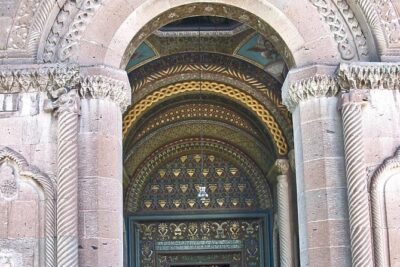
Group Tour: Echmiadzin Cathedral & churches, Zvartnots Temple
Read our review →
Group Tour: Echmiadzin Mother Cathedral, Hripsime, Zvartnots
Read our review →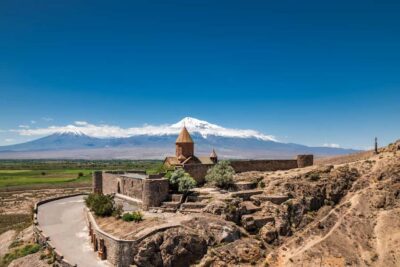
Khor Virap, Echmiadzin & Zvartnots UNESCO Small-Group Tour
Read our review →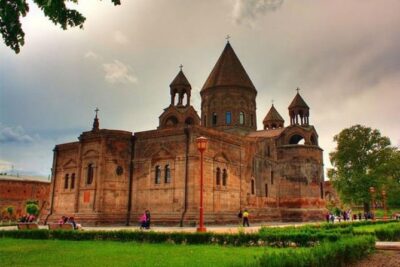
Private tour to Echmiadzin (st Cathedral), Zvartnots, Khor Virap, Garni, Geghard
Read our review →
Private 8-9-hour Echmiadzin, Zvartnots, Garni and Geghard trip from Yerevan
Read our review →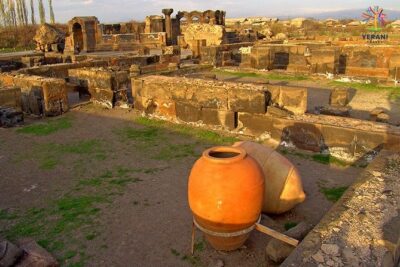
Khor Virap, Echmiadzin & Zvartnots UNESCO Small-Group Guided Tour
Read our review →
Browse the lists this tour appears in