
Reviewed · CITY TOURS
Soviet Yerevan: Small-Group City Experience
Yerevan’s Soviet past is easiest to understand when you leave the polished center. This small-group tour of no more than six people takes you by metro, Soviet-style van, market, apartment blocks, and a children’s railway built in 1937. It shows how ordinary people lived, traveled, shopped, and spent their free time.
I like the careful route, which gives each stop a clear purpose, and I like the human touch from guides such as Marine, whose personal memories and Soviet jokes add warmth to the facts. The market snacks, metro ride, and possible Soviet ice cream make this feel like a lived-in city experience rather than a string of monuments.
The main consideration is focus. If you want Yerevan’s major churches, museums, or grand viewpoints, this is not that tour. It is best for you if Soviet history, everyday life, and less familiar parts of the city sound more appealing than a standard sightseeing circuit.
Key points to know before you book
- Lenin Square becomes Republic Square: Begin with the political heart of Soviet Yerevan, where Lenin’s statue once faced parades and public celebrations.
- A real metro ride is included: Use Yerevan’s public transport and walk through the tunnel connecting Sasuntsi Davit station with the railway station.
- Bangladesh means a Yerevan market district: In Malatia-Sebastia, sample perashki, ponchik, and a local sweet while browsing agricultural stalls.
- Soviet housing is part of the story: Beknazarian Street reveals the apartment blocks built to house workers, along with buildings completed near the end of the Soviet period.
- The 1937 Children’s Railway still matters: See the original station building and first locomotive beside the Hrazdan river and canal.
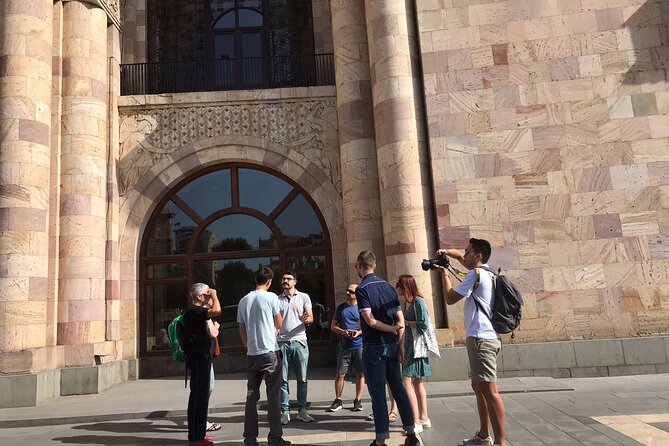
- The group stays tiny: The maximum is six people, which helps the guide explain details and keep the route moving.
Why Soviet Yerevan is worth seeing
Yerevan can first appear to be a city of pink stone, broad streets, cafés, and monumental public buildings. That view is real, but incomplete. The Soviet era shaped the city in quieter ways: its metro, apartment districts, markets, railway links, public parks, and leisure spaces.
This tour gives you a four-hour look at that side of Yerevan. You will not simply hear dates and political labels. You will see the places where Soviet power was displayed, then move into the districts where people worked, shopped, raised children, and spent their days.
That change of scale is the tour’s greatest strength. Republic Square explains official ceremony. Bangladesh market brings you closer to daily commerce. The apartment blocks show how the state planned housing. The Children’s Railway reveals how recreation and education were mixed together.
At $65 per person, the price is reasonable if you value a guide-led route and included food rather than simply ticking off sights. You are paying for local transport, a private-feeling group of up to six, snacks, and interpretation across several parts of the city. It is less compelling if you only want a quick walking tour of central Yerevan.
A few more Yerevan trips to weigh up
- Yerevan city tour with drinks in a classic car with photography
★ 5.0 · 41 reviews - Private Tbilisi Tour from Yerevan (main sights of old and new city, cable car)
★ 5.0 · 39 reviews - Private Yerevan City Tour: Erebuni, Matenadaran & Tsitsernakaberd Museums
★ 5.0 · 34 reviews
Republic Square and the vanished Lenin statue
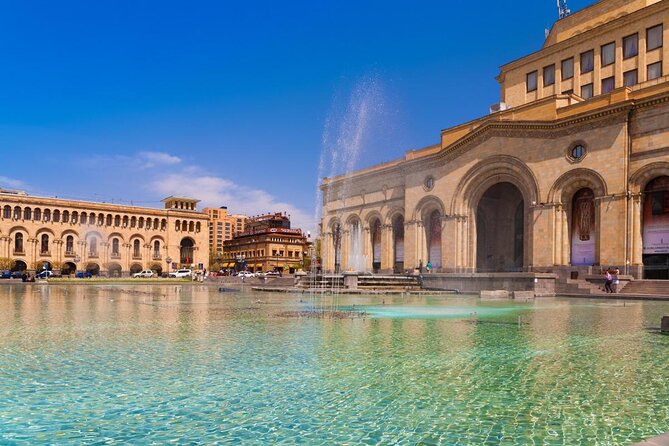
The tour begins at the Ministry of Foreign Affairs in Government House No. 2 on Republic Square. This is a useful starting point because the square lets you see the official face of Soviet Yerevan before the route moves into everyday neighborhoods.
During the Soviet period, the square was called Lenin Square. A statue of Vladimir Lenin once occupied the space, and Soviet parades and public celebrations took place here twice a year, with three annual events held during an earlier period.
After Armenian independence, Lenin’s statue was removed and the square received its current name. The stop lasts about 15 minutes and has no admission charge, so it is brief by design. I like that restraint. You get the political setting without spending the whole afternoon on symbolism.
Pay attention to what is absent as well as what remains. The open square, its scale, and its role in civic life continue, but the central Soviet figure is gone. That gives your guide a natural way to explain how public space can change meaning after a political system ends.
Because the tour begins here, arrive ready to start at the Ministry of Foreign Affairs meeting point. The experience ends elsewhere, at Diana Abgar Park on Arami Street, so do not plan on returning to Republic Square with the group.
Sasuntsi Davit station and Yerevan’s underground network
Next, you use Yerevan’s metro, one of the most practical surviving pieces of Soviet city planning. Sasuntsi Davit is one of the city’s original metro stations, opened to the public on March 7, 1981.
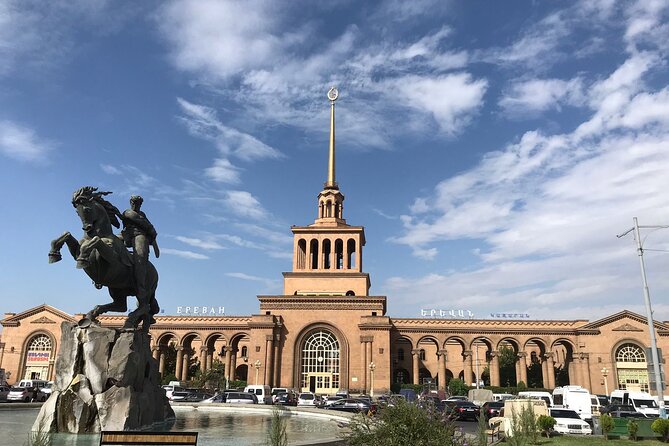
The station connects to the adjacent Yerevan railway station by a pedestrian tunnel. That link matters because it shows how transport was planned as a network rather than as separate points on a map. The name comes from David of Sassoun, an Armenian cultural hero whose statue is located outside the railway station.
The stop lasts about 35 minutes. It includes the metro ride and the station area, so you get more than a quick look at a platform. Public transportation is included in the tour, which saves you from sorting out tickets and lets the guide explain what you are seeing as you go.
This part also helps break up the walking. You will be moving through several districts over four hours, and the metro gives the route a sense of real city travel. It is not a staged transport display. You are using the system as residents do.
Still, keep your expectations in check. The metro portion is included to support the story, not to provide a long ride across the city. The value is in the connection between transport, railway access, and Soviet planning.
Bangladesh market in Malatia-Sebastia
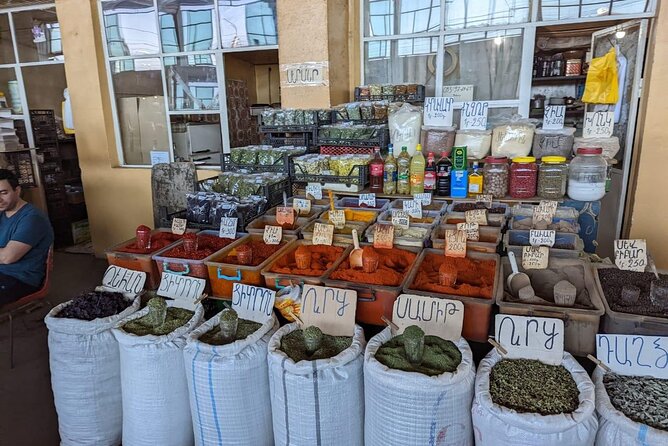
The most unexpected stop is likely Malatia-Sebastia, where an area known as Bangladesh is associated with agricultural products. The name alone gives the neighborhood a bit of local character, but the market is the real reason to come.
You will have about an hour here. That is the longest stop on the route, and it gives you time to look around rather than rush through a few stalls. The focus is on local food and ordinary shopping, not a polished visitor market.
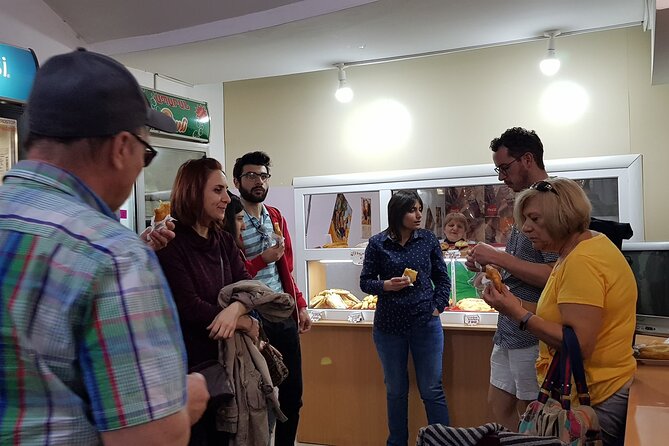
Included tastings are perashki, ponchik, and a local sweet. These snacks add useful context because food often explains daily life more clearly than a formal lecture. You can connect the Soviet story to the habits of shopping, sharing, and eating that continue beyond the period itself.
I especially like this stop for anyone who wants to see the city’s outskirts and understand how the tour’s Soviet theme reaches into present-day life. The market is not only about the past. It shows a district still used for practical commerce.
The trade-off is that market visits are less predictable than museum stops. The experience depends on what is operating and available that day, and the setting may feel rougher and less orderly than central Yerevan. That is part of its value, but you should choose this tour only if you are comfortable with everyday urban environments.
Bring an open mind and a reasonable appetite. The food is included, but the tour does not promise a full meal. Treat the tastings as part of the route rather than as a substitute for lunch.
Same highlands, a completely different kind of day:
- Group Tour: Garni, Symphony of Stones, Geghard, Lavash Baking
★ 5.0 · 1,042 reviews - Group Tour: Lake Sevan (Sevanavank), Dilijan (Goshavank, Haghartsin)
★ 5.0 · 1,036 reviews - Garni & Geghard Small-Group Day Trip with Lavash Baking
★ 4.8 · 881 reviews - Khor Virap, Noravank and Birds’ Cave Trip with Wine Tasting
★ 4.8 · 845 reviews
Beknazarian Street and the architecture of workers’ housing
At Beknazarian Street, the tour turns to the built environment. This area includes apartment buildings from the Soviet period, created to house the proletariat. The point is not only to admire concrete or stone facades. It is to ask what kind of city the Soviet system tried to build.
Housing is one of the clearest ways to understand a political era. Apartment blocks tell you about population growth, state planning, shared urban services, and the effort to move people into organized districts. Your guide can also discuss the last buildings completed during the Soviet period, giving you a sense of how the style and priorities changed near the end.
The stop takes about 30 minutes. That is enough for an architectural walk and explanation without turning the tour into a technical building survey. If you enjoy Soviet-era design, bring a camera and look beyond the most famous central streets.
The included Soviet ice cream adds a small but effective touch. It links architecture to memory and everyday pleasure. Availability is not guaranteed, so consider it a lucky extra rather than a promised part of the food plan.
This stop may be less exciting for you if buildings are not your interest. There is no major museum admission or dramatic viewpoint here. The reward comes from noticing scale, layout, and the way people still use these districts.
The Children’s Railway beside the Hrazdan river
The final major stop is the Children’s Railway, located between the Hrazdan river and the Hrazdan water canal. It was built in 1937 as one of many children’s railways created across the Soviet Union.
The idea was simple but unusual. Children could come to learn about trains and gain practical motivation through a working railway setting. In Armenia, the railway continued operating after the Soviet Union broke apart, which gives the place a longer story than its original political purpose.
You will have about 40 minutes here. The original main station building and the first locomotive from 1937 remain intact. That makes this one of the most tangible stops on the route. Instead of seeing only a later reconstruction or an abstract memorial, you can look at surviving railway equipment and the station built for the original project.
The setting beside the river and canal also changes the mood. After the market and apartment blocks, this is a quieter place to think about childhood, education, and public recreation. It shows a side of Soviet life that was not limited to work and political ceremony.
Admission to the Children’s Railway is included. The stop is particularly suitable for you if you enjoy unusual transport history, preserved machinery, or places that still serve a local purpose after their original system has changed.
How the four-hour route works
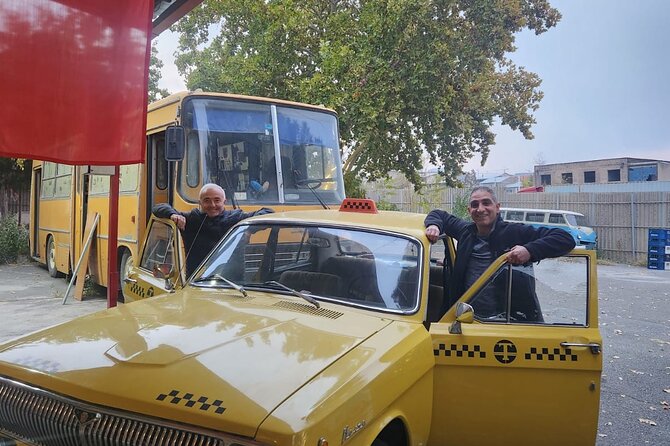
The listed stops add up to about three hours. The remaining time allows for transfers, the metro, the Soviet-style van, food stops, and the guide’s explanations. Do not expect a fast hop-on, hop-off outing. The route works because each location builds on the last.
The transport mix is a real advantage. Walking alone would make the route tiring and slow. A standard vehicle tour would miss the point of using public transport. Here you get a metro ride plus a Soviet-style van, which helps you experience the city at street level and underground.
The group maximum is six people. That is small enough for questions and conversation, and it should make the market and transport portions easier to manage than they would be with a large coach group. The tour is offered in English and includes a local expert guide.
The schedule shown for this experience is Monday from 10 a.m. to 2 p.m. Confirm the available date when booking, especially since the operating information covers November 12, 2025, through January 13, 2027. Confirmation is normally sent at booking, but bookings made within two days of departure may take up to 48 hours and depend on availability.
Most people can participate, though the route includes walking, public transport, a market, and different urban surfaces. No detailed accessibility information is provided, so contact Envoy Tours before booking if you need specific assistance.
The guide makes the history personal
Facts about Lenin Square, metro construction, and housing policy can become dry if they are delivered as a list. The guide is important here because the experience depends on connecting official history with ordinary life.
Marine is the guide named in the tour feedback, and her personal stories and Soviet jokes were singled out as part of the appeal. If she is leading your departure, expect a more personal style alongside the historical explanation. Guide assignments can change, so treat Marine as an example rather than a guarantee.
The best questions to ask are practical ones. Ask how people used the metro, what the apartment districts were meant to provide, why the market area is called Bangladesh, and how the Children’s Railway fits into Armenian life today.
This is also why the six-person limit matters. A small group gives the guide room to respond rather than repeat a fixed speech. It can also make personal stories easier to share without holding up a large party.
Is $65 good value in Yerevan?
For a four-hour experience, $65 is a fair midrange price. The cost includes the guide, public transport, the Soviet-style van, market snacks, a local sweet, and admission to the Children’s Railway. You also get a route that would be difficult to plan efficiently on your own, especially if you do not read Armenian or know how the neighborhoods connect.
The strongest value comes from the range of the experience. You move from a central civic square to a metro station, an outer district market, Soviet housing, and a historic railway site. A cheaper self-guided outing might cover one or two of these, but not with the same sequence or explanation.
The price is less attractive if you are mainly looking for iconic Yerevan sights. You could spend four hours visiting central landmarks, museums, or churches instead. This tour earns its cost through access to a particular theme, not through a large number of admission tickets.
Free cancellation is available if you cancel at least 24 hours before the start time. Cancellations made later are not refunded, and changes within that period are not accepted. The tour also requires a minimum number of participants, so if the operator cancels for that reason, you can choose another date or experience, or receive a full refund.
Who should book Soviet Yerevan?
I would choose this tour if you have already seen some of central Yerevan, or if you prefer city life to a checklist of monuments. It is a strong match for anyone interested in Soviet history, urban planning, public transport, markets, architecture, and unusual local attractions.
It also suits you if you enjoy food stops that are modest and local rather than formal restaurant visits. The perashki, ponchik, sweet, and possible ice cream are small details, but they make the afternoon more social and concrete.
Families with an interest in trains may enjoy the Children’s Railway, though the tour is not described as a children-specific activity. People with limited mobility should ask about the route before booking because the experience uses a metro, walking connections, market paths, and a van.
I would skip it if you want a relaxed walking tour in the historic center, a full meal, or a guaranteed ice cream stop. I would also skip it if Soviet-era architecture and daily life do not appeal to you. The tour is focused, and it does not try to be a general introduction to all of Yerevan.
My verdict on this four-hour city experience
Soviet Yerevan succeeds because it links big political change to small daily details. Lenin’s statue is gone, but the square remains. The metro still carries people. The market still sells food. Apartment blocks still shape neighborhoods. The Children’s Railway still preserves a piece of a Soviet educational idea.
I like the methodical route, the small group, and the mix of transport, food, architecture, and local stories. The main limitation is also clear: this is a specialist tour. Book it for a different side of Yerevan, not as a replacement for the city’s classic sights.
At $65, it is a good choice for you if you want an English-language guide, included transport and tastings, and a direct look at how Soviet life shaped the Armenian capital. If that sounds like your kind of afternoon, this is one of the more distinctive ways to spend four hours in Yerevan.
FAQ
How long is the Soviet Yerevan tour?
The experience lasts approximately four hours, from 10 a.m. to 2 p.m. on the listed Monday schedule.
Where does the tour start?
It starts at the Ministry of Foreign Affairs, Government House No. 2, on Republic Square in Yerevan.
Where does the tour end?
The tour ends at Diana Abgar Park on Arami Street in Yerevan.
Is public transportation included?
Yes. The tour includes a Yerevan metro ride and transport in a Soviet-style van.
What food is included?
The experience includes perashki, ponchik, and a local sweet at the market. Soviet ice cream may also be available, but it is not guaranteed.
How many people can join the group?
The tour has a maximum of six participants.
Can I cancel for a full refund?
Yes, if you cancel at least 24 hours before the experience start time. Cancellations made less than 24 hours in advance are not refunded.
Just added around Yerevan
- Yerevan: Garni, Geghard, Lake Sevan & Dilijan Day Trip★ 3.0 · 12 reviews
- Winter Special – Tsaghkadzor, Kecharis, Abovyan & Lake Sevan★ 4.0 · 10 reviews
- Private Yerevan City Tour with museums★ 5.0 · 5 reviews
- Yerevan Walking Tour★ 5.0 · 3 reviews
- Yerevan City Tour★ 5.0 · 9 reviews
- Group Tour: Sightseeing and walking tour in Yerevan★ 5.0 · 3 reviews
- Unlock the Yerevan City (Walking Tour)★ 5.0 · 3 reviews
- Vayots Dzor Areni Wine Route★ 3.5 · 3 reviews
City Tours, compared.

Yerevan city tour with drinks in a classic car with photography
Read our review →
Private Tbilisi Tour from Yerevan (main sights of old and new city, cable car)
Read our review →
Private Yerevan City Tour: Erebuni, Matenadaran & Tsitsernakaberd Museums
Read our review →
Walking Yerevan City Tour with 5 Wine & 10 years-old brandy
Read our review →
Private tour to Tsaghkadzor city (Ropeway), Lake Sevan, Sevanvank, Dilijan
Read our review →
Private Tour to Tsaghkadzor city (Ropeway) and Kecharis Monastery
Read our review →Browse the lists this tour appears in