
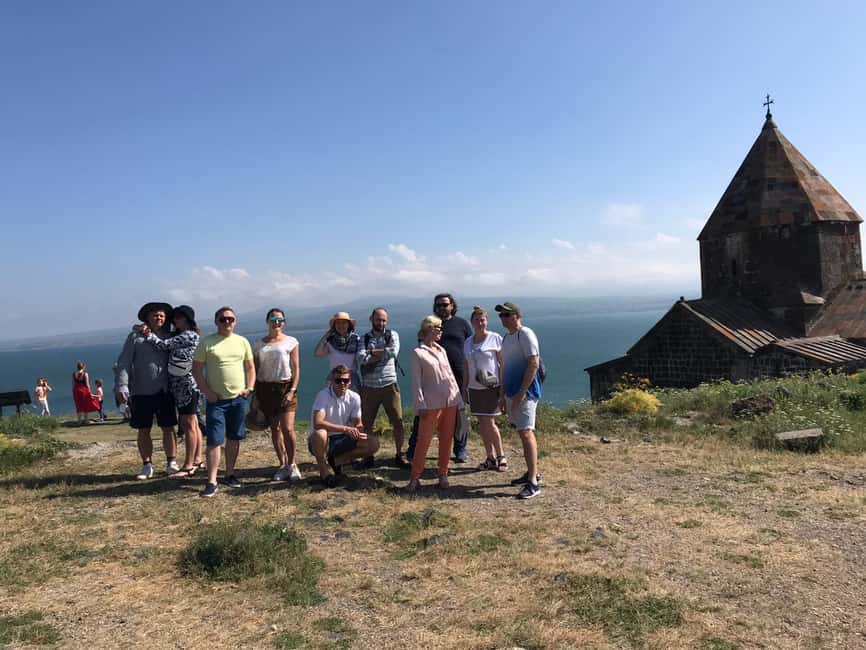
Reviewed · LAKE SEVAN TOURS
Private tour to Lake Sevan, Noratous, Hayravank, Sevanavank
Lake Sevan is Armenia’s great mountain lake, and this day trip gives you three very different ways to meet it: broad water views at Sevanavank, medieval stonework at Noratus, and the quiet, sunlit interior of Hayravank. The highlight for me is the private format, which lets you set the pace instead of following a large bus.
I like the excellent value for a group of up to three, and I like the chance to hear road stories and make photo stops with a driver-guide such as Artur. The main drawback is simple: this is a seven-hour day with several historic sites, so it may feel rushed if you want long walks, a full meal, or detailed time at every monument.
Key points at a glance
- Lake Sevan from Sevanavank: Begin with Armenia’s famous high-altitude freshwater lake and one of its best-known monastic views.
- Black tuff churches: Sevanavank’s two surviving churches, Surb Arakelots and Surb Astvatsatsin, were built from dark volcanic stone.
- Noratus’s 800 khachkars: Walk through an open-air cemetery displaying stone crosses carved from the ninth through seventeenth centuries.
- Hayravank’s changing light: Narrow windows can send shafts of sunlight across the church interior, creating the most atmospheric stop of the day.
- Private transport for three: At $120 per group, the price works especially well when shared by two or three people.
- Flexible, practical touring: Hotel pickup, bottled water, free cancellation up to 24 hours ahead, and payment later make planning easier.
Why Lake Sevan makes a good day from Yerevan
Lake Sevan is often called Armenia’s Blue Pearl or the Geghama Sea. It is one of the world’s largest high-mountain freshwater lakes, and its scale gives this outing a welcome change of pace from Yerevan’s streets and museums.
You do not visit the lake as a separate nature stop and then rush through unrelated monuments. The churches and cemetery are tied closely to the area around Sevan, so the day has a clear shape. You get water and open views first, then Armenian stone carving, then a quieter monastery at the end.
The drive from Yerevan is included in an air-conditioned vehicle, with pickup and drop-off at your hotel. That matters in Armenia, where arranging separate transport for three spread-out places can take time and may cost more than expected. You can also ask for short photo stops along the way. Artur, named in several bookings, was noted for being patient with extra stops and for sharing facts about places along the road.
The $120 price covers the whole private group, not each person. For three people, that is $40 each before any optional meal. Even for two, it can be a sensible choice if you value door-to-door service and a guide who can adjust the rhythm. A solo visitor pays the same group rate, so the value is strongest when you share the vehicle.
More Lake Sevan Tours in Yerevan
- Group Tour: Lake Sevan (Sevanavank), Dilijan (Goshavank, Haghartsin)
★ 5.0 · 1,036 reviews - Group Tour: Tsaghkadzor (Kecharis, Ropeway), Lake Sevan, Trout barbecue treat
★ 5.0 · 511 reviews - Group Tour: Garni pagan temple, Geghard monastery, Lake Sevan, Sevanavank
★ 5.0 · 430 reviews
Sevanavank and the first look at the lake
Your first major stop is Sevanavank, on a narrow rocky peninsula in the northwestern part of Lake Sevan. The approach gives you the main visual reward early: dark stone churches above the water, with the lake spreading out around them.
Princess Mariam founded the monastery in 874 AD. The original complex was larger, but only two churches remain: Surb Arakelots and Surb Astvatsatsin. Their black tuff construction likely explains the name Sevanavank, commonly understood as the Black Monastery.
I like this stop because it combines a clear sense of place with memorable architecture. The church stone is not decorative in a soft or polished way. It has a strong, dark character that fits the exposed peninsula and the wide lake beyond it. You can spend about an hour and a half here, including a guided visit, sightseeing, and free time.
That 90-minute window should be enough to see the churches and khachkars without turning the visit into a sprint. You will want comfortable shoes, since the site involves a rocky setting and walking around the monastery. A hat and sunscreen are useful because the information specifically advises protection from the weather, and there may be little shade in open areas.
Sevanavank is also the stop most likely to feel busy within your own day, simply because it is the best-known place on the route. You should not expect a long, private meditation in every corner. The reward is the combination of architecture and view, not an extended archaeological study.
Noratus Cemetery and Armenia’s stone-cross tradition
From Sevanavank, the tour continues to Noratus, famous for its cemetery and its collection of khachkars. The oldest part contains more than 800 stone crosses, carved between the ninth and seventeenth centuries.
A khachkar is a carved Armenian cross set into a slab of stone. Noratus is valuable because the carvings cover several periods of the art form rather than showing only one style. The site reflects three broad phases: the ninth and tenth centuries, the eleventh and twelfth centuries, and the thirteenth through sixteenth centuries.
This is not just a photo stop with a few old stones. It is an open-air record of changing Armenian design. Look for differences in pattern, density, and framing as you move among the crosses. You do not need to identify every period to appreciate the point: the cemetery lets you see how a religious art form developed over hundreds of years in one place.
The scheduled visit is about 40 minutes. That is enough for a guided introduction, photographs, and a walk through part of the cemetery. It is not enough for a slow examination of all 800 khachkars, so keep your expectations realistic. The best approach is to listen to the explanation, choose a few stones that catch your eye, and pay attention to the repeated cross and plant-like patterns.
Noratus may be the most unusual stop for people who enjoy sculpture, cemeteries, and quiet historic places. It is less immediately dramatic than a monastery above a lake, but it gives the day its strongest sense of continuity. Sevanavank shows a famous building. Noratus shows a whole tradition spread across a field of stone.
Hayravank’s ninth to twelfth-century setting
The final major stop is Hayravank Monastery, also spelled Haravank in some descriptions. It dates from the ninth through twelfth centuries and includes three main structures: a church, a chapel, and a gavit, the enclosed hall often attached to Armenian churches.
Hayravank is a good ending because its appeal is more intimate than Sevanavank’s. The interior is described as fairly simple, but narrow windows can transform it when sunlight enters at the right angle. Rays crossing the dark interior create a strong feeling of quiet and holiness without the need for elaborate decoration.
You have about an hour here for a photo stop, guided visit, sightseeing, and free time. That gives you a little more breathing room than Noratus. I would use it to look closely at the church rather than treating the monastery as a quick final photograph.
The light effect depends on the sun, so it is best understood as a possibility, not a guaranteed performance. Even without the ideal rays, the church, chapel, and gavit give you a compact group of medieval buildings to explore. The site also helps you compare two monasteries from the same broad regional tradition. Sevanavank has the powerful setting and black tuff churches. Hayravank offers a simpler interior and a more restrained mood.
The order works well. After the big lake view and the open cemetery, Hayravank gives you a quieter final stop before the drive back to Yerevan.
Same highlands, a completely different kind of day:
- Group Tour: Garni, Symphony of Stones, Geghard, Lavash Baking
★ 5.0 · 1,042 reviews - Garni & Geghard Small-Group Day Trip with Lavash Baking
★ 4.8 · 881 reviews - Khor Virap, Noravank and Birds’ Cave Trip with Wine Tasting
★ 4.8 · 845 reviews - Yerevan: Garni, Geghard, Symphony of Stones & Lavash Baking
★ 4.8 · 758 reviews
What the private vehicle changes
A private tour is not automatically better for everyone, but here it solves several practical problems. You do not need to coordinate separate rides to Lake Sevan, Noratus, and Hayravank. You also have a driver who can wait while you walk through each site and return you to Yerevan afterward.
The vehicle is air-conditioned, which is useful on a long day and especially welcome after walking around open stone sites. Bottled water is included. Meals are not, though an optional meal can be arranged according to the tour information, so you should clarify the food plan when booking if lunch matters to you.
The private setup is particularly useful for couples, friends, or a small family group with similar interests. If you want extra time for photographs, need a slower pace, or hope to make a brief stop along the road, you can ask. Artur was specifically praised for being punctual, friendly, patient, and willing to make several photo stops without complaint.
The tradeoff is that the experience depends heavily on the driver-guide assigned to your booking. The listed languages are Armenian, English, and Russian, and Artur is one named driver-guide associated with the experience. If language or guide preference matters to you, confirm it before departure rather than assuming a particular person will be available.
A realistic seven-hour schedule
The full experience lasts about seven hours, including the trip from Yerevan and the return. The listed sightseeing time totals roughly three hours: 1.5 hours at Sevanavank, 40 minutes at Noratus, and one hour at Hayravank. The remaining time is used for driving between the sites.
That balance is important. This is an efficient introduction to the Gegharkunik Province, not a slow archaeological field day. You will see the essential monuments, receive explanations, and have free time at each location, but the route is built around fitting three stops into one day.
I would keep the morning and early afternoon open rather than scheduling another major activity in Yerevan. Delays can happen on any road trip, and you will enjoy the day more if you do not spend the return journey watching the clock.
Wear weather-appropriate clothing, a hat, sunscreen, and comfortable shoes. Shorts and skirts are not allowed, so choose trousers or another suitable option. This clothing rule is especially relevant at religious sites, where modest dress is expected.
The tour is not suitable for wheelchair users. If you have limited mobility but do not use a wheelchair, ask for a precise description of the walking surfaces before booking, since the information confirms historic sites and a rocky peninsula but does not provide detailed accessibility notes.
Who will get the most from this outing
I would recommend this tour to anyone staying in Yerevan who wants to see Lake Sevan without arranging a rental car or public transport. It suits first-time visitors who want a compact introduction to medieval Armenian architecture and khachkar carving.
It is also a good match for photographers. You get water views, dark volcanic church stone, rows of carved crosses, and changing interior light. The private format gives you a better chance of asking for a short roadside stop than a fixed group coach would.
History-minded visitors should especially appreciate the range of dates. Sevanavank was founded in 874, Noratus preserves work from the ninth to seventeenth centuries, and Hayravank includes buildings from the ninth to twelfth centuries. In one day, you see architecture and carving from many centuries without visiting several separate regions.
I would hesitate only if your priority is a long meal by Lake Sevan, swimming, extended hiking, or a full study of Noratus Cemetery. None of those is presented as a main part of the experience. The focus is sightseeing at three historic sites, with the lake as the scenic thread.
The overall rating is 4.7 from six ratings, and the strongest pattern in the feedback is practical service. The named driver Artur was praised for kindness, punctuality, patience, responsibility, and useful comments about places along the road. That is exactly the sort of service that helps on a full private day.
Booking value and final advice
At $120 for up to three people, this is a strong value if you fill the vehicle. You are paying for private transport, hotel pickup and return, an air-conditioned vehicle, bottled water, and a driver-guide in Armenian, English, or Russian. Meals cost extra, so budget separately if you want food during the day.
The reserve-now-and-pay-later option keeps your plans flexible, and cancellation is free up to 24 hours before departure. You should still check the available starting times, since the experience lasts seven hours and the best schedule depends on how you want to use the rest of your day.
You should book this tour if you want a well-organized first look at Lake Sevan and nearby Armenian monuments, especially with two or three people sharing the cost. Choose it with realistic expectations: it is a focused road trip, not a leisurely lakeside holiday.
If you want the lake, two monasteries, and one of Armenia’s finest khachkar collections in a single private day, I think this route earns its place on your Yerevan plans. The best reasons are the variety of the stops, the manageable group size, and the chance to travel with a patient driver-guide who can add a few useful roadside moments.
FAQ
How long does the Lake Sevan private tour last?
The tour lasts seven hours, including pickup in Yerevan, visits to the three sites, and the return to Yerevan.
Where does the tour begin and end?
Pickup and drop-off are provided at your hotel in Yerevan.
How many people can join the private group?
The $120 price covers one private group of up to three people.
Which languages are available?
The driver-guide service is available in Armenian, English, and Russian.
What is included in the price?
Hotel pickup and drop-off, an air-conditioned vehicle, and bottled water are included.
Are meals included?
No. Meals are not included, though an optional meal may be available.
What should I wear and bring?
Bring weather-appropriate clothing, sunscreen, a hat, and comfortable shoes. Shorts and skirts are not allowed.
Is the tour suitable for wheelchair users?
No. The experience is not suitable for wheelchair users.
Just added around Yerevan
- Yerevan: Garni, Geghard, Lake Sevan & Dilijan Day Trip★ 3.0 · 12 reviews
- Winter Special – Tsaghkadzor, Kecharis, Abovyan & Lake Sevan★ 4.0 · 10 reviews
- Private Yerevan City Tour with museums★ 5.0 · 5 reviews
- Yerevan Walking Tour★ 5.0 · 3 reviews
- Yerevan City Tour★ 5.0 · 9 reviews
- Group Tour: Sightseeing and walking tour in Yerevan★ 5.0 · 3 reviews
- Unlock the Yerevan City (Walking Tour)★ 5.0 · 3 reviews
- Vayots Dzor Areni Wine Route★ 3.5 · 3 reviews
Lake Sevan Tours, compared.
Group Tour: Lake Sevan (Sevanavank), Dilijan (Goshavank, Haghartsin)
Read our review →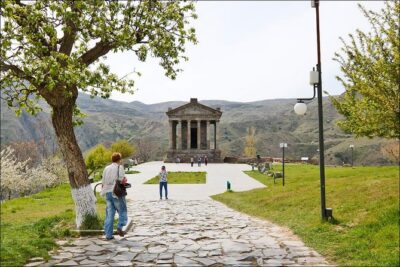
Group Tour: Garni pagan temple, Geghard monastery, Lake Sevan, Sevanavank
Read our review →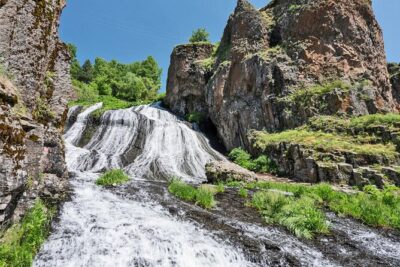
Group Tour: Lake Sevan, Hayravank, Noratus, Jermuk, winery
Read our review →
Tsaghkadzor, Sevan Lake, and Sevanavank Guided Tour
Read our review →
Private 7-8 hour Trip to Garni – Geghard – Lake Sevan – Sevanavank from Yerevan
Read our review →
Private Lake Sevan, Sevanavank, Dilijan, Haghartsin, Goshavank Tour from Yerevan
Read our review →
Lake Sevan & Dilijan Guided Day Trip with Ijevan Wine Tour
Read our review →Lake Sevan & Dilijan Guided Day Trip with Ijevan Wine Tour
Read our review →Browse the lists this tour appears in