
Reviewed · LAKE SEVAN AND DILIJAN TOURS
3 Day All of Armenia Private Tour from Yerevan
Armenia packs a remarkable amount into a small country, and this three-day private tour gives you a broad first look. In quick succession, you see Mount Ararat, a 6,000-year-old shoe site, pagan and Christian monuments, an ancient wine region, and Lake Sevan.
I like the mix of major sights and hands-on stops. The Lavash baking class turns a historic visit into something you can take part in, while the Areni wine tasting adds a taste of local life. Private transport also means you are not tied to a large group or a rigid pace.
The trade-off is distance and tempo. Each day covers a lot of ground, so you should expect several hours in the vehicle and limited time at some sites. Garni, Geghard, and Lake Sevan in one day is rewarding, but it is not a slow village-to-village trip.
Key points at a glance
- Oldest leather shoe site: Enter Birds’ Cave, also called Areni-1, where archaeologists found an ancient leather shoe considered the oldest in the world.
- Best Mount Ararat view: Stop at the Arch of Charents and Khor Virap for two different ways to appreciate Armenia’s famous biblical mountain.
- Lavash with your own hands: Join a bread-baking class in Garni, where traditional Lavash making is recognized by UNESCO as cultural heritage.
- Three UNESCO-linked stops: See Geghard, Etchmiadzin, and Zvartnots, each tied to Armenia’s religious and architectural story.
- Private and flexible: A car, minivan, or minibus is used according to group size, with hotel pickup and drop-off in Yerevan.
- Good value for a short visit: At $259 per person, the package includes transport, water, wine tasting, Lavash baking, and assistance, but not meals or several entrance fees.
Why this route works for a first visit
This tour is designed around three full sightseeing days from Yerevan. You return to the city each evening, so you do not need to change hotels or arrange intercity transport. That makes the trip simple, especially if you are using Yerevan as your base.
The route also gives you several sides of Armenia. Day one focuses on the Ararat plain, religious sites, archaeology, and wine. Day two combines pre-Christian Armenia, medieval Christianity, food, and the high waters of Lake Sevan. Day three turns toward the country’s spiritual center, early medieval architecture, the Kasakh River valley, and the Armenian alphabet.
I like that the program does not treat Armenia as only a monastery destination. The cave, wine, bread, views, and alphabet monument add variety. If you want a quiet, slow schedule with long meals and unplanned stops, this is not the right format. If you have only three days and want to see the country’s headline sights without managing the roads yourself, it makes good sense.
A guide is included when you select the option with guide, and the language should be specified in your message. One particularly praised guide connected with this service is Elen, who has provided cultural, historical, and nature-focused explanations in clear English. The driver named in one booking was Artyom, and the spacious minibus was a welcome feature. Staff names and vehicles can change, so treat those details as examples rather than guarantees.
A few more Armenia trips to weigh up
- Best of Armenia: private 2-3 days tour to Yerevan w/ family lunch
★ 5.0 · 38 reviews - 3 day private tours in Armenia from Yerevan
★ 5.0 · 19 reviews - 3 Day Private Tour with an Exclusive Visit to Gyumri
★ 5.0 · 3 reviews
Day one: Khor Virap, the Ararat plain, and Areni wine
Your first morning runs south from Yerevan toward Khor Virap. The monastery sits near the foot of Mount Ararat, and on a clear day the mountain gives the stop its unforgettable shape. Ararat is outside modern Armenia’s borders, but it remains central to Armenian identity and religious tradition.
Khor Virap is also tied to the story of Armenia’s conversion to Christianity. It is one of the country’s major sanctuaries, and the setting helps explain why. You are not simply looking at a church on a hill. You are looking across a broad plain toward a mountain that carries biblical and national meaning.
Bring patience with the weather. The view of Ararat depends on visibility, and no tour can guarantee a clear mountain. The stop remains worthwhile for the monastery and setting, but the famous photograph is best treated as a bonus.
The next unusual stop is Areni-1, better known as Birds’ Cave. The cave is made up of rocky chambers, niches, and passageways used by people in different periods. Archaeological work there uncovered an ancient leather shoe, described as the oldest shoe in the world.
This is a small and rugged archaeological site, not a polished museum display. Comfortable shoes matter, and you should expect uneven ground. The appeal is its direct connection to ordinary ancient life. A monastery can show you architecture and belief; Birds’ Cave gives you a physical object linked to a person who lived thousands of years ago.
The day continues to Noravank, one of Armenia’s most striking monasteries. It sits in a dramatic canyon, with red-toned rock walls adding much of the visual force. The monastery’s location is the star here, though the buildings deserve close attention too.
Noravank can feel more intimate than the grandest religious complexes on the route. Look up at the carved stonework and take time to notice how the monastery fits into the canyon. The stop is especially rewarding for photography, but the rough setting means you will want practical footwear rather than city shoes.
Areni winery brings the day to a warmer, more social close. Armenia has an old wine-making tradition, and Areni is one of the country’s main areas for wine. The tasting is included, so you can sample the local character without arranging a separate visit.
Wine tasting is not just a pleasant extra here. It connects the cave, the valley, and the modern economy. You see that the region is not only a collection of ancient sites. It is also a working place where food and drink remain part of daily culture.
Lunch and drinks beyond the included wine tasting are not covered. Plan on paying separately for your midday meal. Since the day includes several stops, a full lunch break may feel important, especially if you prefer not to eat on the move.
Day two: Pagan Garni, Lavash, Geghard, and Lake Sevan
Day two starts with the Arch of Charents, a simple viewpoint with a major reward. From here, you can admire Mount Ararat from a different angle. The arch is a short stop, but it gives you a useful orientation to the country’s central scenery.
Garni then shifts the story from Christianity to the ancient pagan world. Garni Temple is the only preserved pagan temple in the Caucasus, and its construction dates to the second half of the first century. It was dedicated to the Sun God.
The temple’s classical design can surprise you. Armenia is often introduced through its churches, so seeing a preserved pagan structure broadens your understanding of the region before Christianity became the state religion. Armenia adopted Christianity in 301, making Garni a useful counterpoint to the monasteries that follow.
Garni has a listed entrance fee of 1,500 AMD, paid separately. That cost is modest, but it is worth carrying some local currency or checking the current payment method before setting out. You should also expect other entry fees during the three days.
The most hands-on part of the trip comes in Garni with the Lavash baking master class. Lavash is Armenia’s traditional flatbread, and its preparation, meaning, and place in Armenian culture were added to UNESCO’s Representative List of the Intangible Cultural Heritage of Humanity in 2014.
This is the sort of activity I value on a tightly scheduled tour. You do not merely hear that bread matters in Armenia. You see how it is made and take part in the process. It also gives the day a break from stone walls and formal monuments.
The class is included, but the supplied details do not specify its exact length or every step. Expect it to be a practical cultural activity rather than a full cooking course. If food experiences matter to you, this is one of the strongest features of the program.
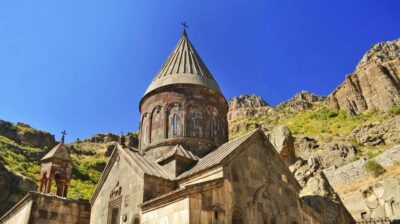
Geghard follows, and the change in mood is striking. This medieval monastery is a UNESCO World Heritage Site, with parts of the complex cut into the rock. Tradition connects its foundation to Saint Gregory in the fourth century and to a sacred spring. The buildings you see today largely date from the 13th century.
Geghard rewards quiet attention. Watch how the carved chambers use the natural rock, and notice the difference between rooms excavated into the mountain and structures built from stone. It is an important religious site, but its physical design is just as memorable.
The day ends at Lake Sevan, Armenia’s large inland lake and one of the country’s best-known natural sights. At Sevanavank, on the peninsula, you visit the monastic complex and look across the water.
This stop is partly about the monastery and partly about the open view. After a day of temples and carved stone, the lake gives you space to breathe. Conditions can be changeable around the water, so weather-appropriate clothing is useful even when Yerevan feels warm.
The sequence is full, and that is the main limitation. Garni, the baking class, Geghard, and Sevanavank each deserve time. A private vehicle gives you more control than a large coach, but it cannot remove the distances between sites.
Day three: Armenia’s spiritual center and the alphabet
The final day visits Etchmiadzin, the religious center of Armenia. Armenia was the first country to adopt Christianity as a state religion in 301, and Etchmiadzin Cathedral remains central to Armenian religious life.
The cathedral was listed as a UNESCO World Heritage Site in 2000. Its importance is not only architectural. For many Armenians, this is the heart of the national church, making the stop especially meaningful if you want to understand how religion shaped the country.
The route then reaches Zvartnots Cathedral, a seventh-century medieval Armenian cathedral now preserved as ruins. UNESCO also recognizes Zvartnots as a World Heritage Site.
Ruins require a little imagination, but Zvartnots has enough surviving structure to show the ambition of the original building. It is an excellent place to compare the remains of a large cathedral with the more complete churches at Etchmiadzin and Geghard.
The separate entrance charge for Zvartnots is 1,500 AMD. Along with Garni at 1,500 AMD and Birds’ Cave at 1,000 AMD, the listed admissions total 4,000 AMD per person. These fees are not large, but including them in your budget avoids small surprises.
Saghmosavank comes next, on the right bank of the Kasakh River. This 13th-century monastery is valued for its position as much as for its buildings. The setting gives the complex extra visual appeal, especially when viewed against the river valley.
The final stop is the Armenian Alphabet Monument. The complex contains stone sculptures of the 39 letters of the Armenian alphabet, along with monuments to major Armenian thinkers. The letters and statues are made from Armenian tufa.
This is an unusual ending, and I like it. You finish not with another church, but with language made visible in stone. The stop helps you see Armenian identity through writing, not only through religion and architecture.
Same highlands, a completely different kind of day:
- From Tbilisi: Day Trip to Armenia Including Homemade Lunch
★ 4.9 · 1,084 reviews - Group Tour: Garni, Symphony of Stones, Geghard, Lavash Baking
★ 5.0 · 1,042 reviews - Group Tour: Lake Sevan (Sevanavank), Dilijan (Goshavank, Haghartsin)
★ 5.0 · 1,036 reviews - Garni & Geghard Small-Group Day Trip with Lavash Baking
★ 4.8 · 881 reviews
Comfort, group size, and daily pace
Pickup and drop-off are included from your Yerevan hotel or accommodation. The driver waits in the hotel lobby, which removes the usual morning uncertainty. A private group also means you can ask to spend more time at a place when the schedule allows.
Transport depends on the number of people in your party. You may travel by car, minivan, or minibus, all with air conditioning and Wi-Fi. One booking used a spacious minibus, which made the long drives more comfortable.
The private format is one of the strongest practical reasons to choose this tour. You are not being collected and deposited with a large crowd. You can ask for directions at each site, and the driver remains available for the next leg rather than leaving you to find another taxi.
Still, private does not mean leisurely. Three days cover a wide area, and the program includes many major stops. Wear comfortable shoes, bring clothing suited to the forecast, and keep water nearby. One bottle per person is included.
The tour is not suitable for wheelchair users. The cave, monasteries, ruins, and uneven historic sites can also be demanding for anyone with limited mobility, even though the official restriction specifically identifies wheelchair access.
What the $259 price includes
At $259 per person, the value depends on how much you would otherwise spend arranging private transport, site transfers, a guide, and separate activities. For a three-day private trip, the package covers hotel pickup and drop-off, transport, air conditioning, Wi-Fi, an English-speaking professional driver, and a guide if you choose the guided option.
Wine tasting and the Lavash class are included, as are a bottle of water, maps of Armenia and Yerevan, and assistance at any time. Those extras give the price more substance than a simple driver-for-hire service.
You should add money for lunch, drinks, and the three listed admissions. The entrance fees come to 4,000 AMD per person based on the supplied prices, though current fees can change. The guided option also deserves careful attention when booking, since you need to select it and state your preferred guide language.
The reserve-now, pay-later option can help if your dates are not fully settled. Free cancellation is available up to 24 hours before the activity for a full refund. Bad weather can affect mountain views and road plans, so flexible arrangements are useful.
Who should book this private Armenia tour
I would recommend this tour to a first-time visitor who wants the major sights without renting a car. It also suits families and groups of friends who value their own vehicle, hotel pickup, and the ability to ask the driver for help at each stop.
It works well for anyone interested in Armenia’s religious past, but the cave, wine tasting, bread class, lake, and alphabet monument keep the program from feeling like three straight days of monasteries.
It may not suit you if you dislike long drives, need generous time at every monument, or prefer to travel independently at a slower pace. You should also think twice if uneven sites are difficult for you.
One useful detail comes from the way the service handled one private booking: communication with the organizer, Maria, continued throughout the trip, and dates could be adjusted if bad weather became a problem. That kind of contact is valuable when mountain views and regional roads affect the plan.
Final call: a strong three-day introduction
Book it if you have three days in Yerevan and want an efficient, private introduction to Armenia. The route gives you more than postcard stops: you see the cave where the ancient shoe was found, taste wine in Areni, bake Lavash in Garni, and connect major churches to the country’s religious story.
Skip it if your ideal holiday means lingering in one valley or building your own schedule hour by hour. For everyone else, the combination of private transport, strong cultural variety, and included food and wine activities makes $259 per person a solid way to cover Armenia’s essential sights in a short visit.
FAQ
How long does the tour last?
The experience lasts three days, with each day beginning and ending in Yerevan.
Is hotel pickup included?
Yes. Pickup and drop-off are included, and the guide or driver waits for you in your hotel lobby.
Is this a private tour?
Yes. It is organized for you, your family, or your friends as a private group.
What type of vehicle is used?
The vehicle depends on the size of your group. Transport may be by car, minivan, or minibus, with air conditioning and Wi-Fi.
Is a guide included?
A professional guide is included if you choose the option with guide. You should specify the language you want in your message.
Are meals included?
No. Lunch and drinks are not included. Wine tasting and the Lavash baking class are included.
What entrance fees must I pay separately?
The listed separate fees are 1,500 AMD for Garni, 1,000 AMD for Birds’ Cave at Areni-1, and 1,500 AMD for Zvartnots.
Is the tour suitable for wheelchair users?
No. The experience is listed as unsuitable for wheelchair users.
Can I cancel the tour?
You can cancel up to 24 hours in advance for a full refund. Reserve-now, pay-later booking is also available.
Just added around Armenia
- Yerevan: Echmiadzin, Hripsime, Gayane & Zvartnots Tour★ 4.0 · 5 reviews
- Yerevan: Garni, Geghard, Lake Sevan & Dilijan Day Trip★ 3.0 · 12 reviews
- Winter Special – Tsaghkadzor, Kecharis, Abovyan & Lake Sevan★ 4.0 · 10 reviews
- Yerevan: Day Tour to Amberd Fortress, Aragats and Kari Lake★ 3.9 · 10 reviews
- Private Day Trip: Garni, Geghard, Symphony of Stones & Sevan★ 5.0 · 3 reviews
- Wine tour Areni Noravank Khor Virap Areni cave★ 5.0 · 3 reviews
- Private Day Trip to Symphony of Stones, Garni & Khor Virap★ 5.0 · 3 reviews
- Tsaghkadzor & Lake Sevan։ Winter Day Tour from Yerevan★ 4.7 · 3 reviews
Lake Sevan and Dilijan Tours, compared.
Garni Temple, Geghard Monastery, & Lake Sevan Tour
Read our review →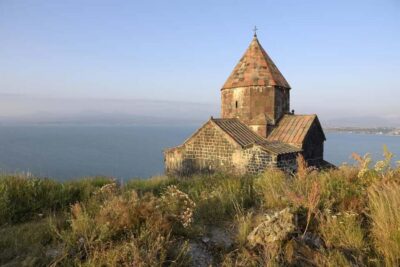
Lake Sevan-Tsaghkadzor ski resort-Kecharis Monastery
Read our review →
Group Tour: Dilijan, Parz Lake, Makaravank, wine factory
Read our review →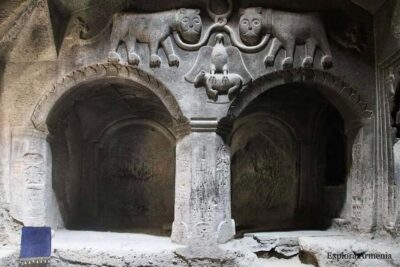
Private Day Trip: Garni, Geghard, Symphony of Stones & Sevan
Read our review →Browse the lists this tour appears in